
How to Dry Clothes in Winter (Outdoors or Indoors)
Learn how to dry clothes in winter using outdoor and indoor methods. Get tips, timing advice, and solutions for common cold-weather drying problems.
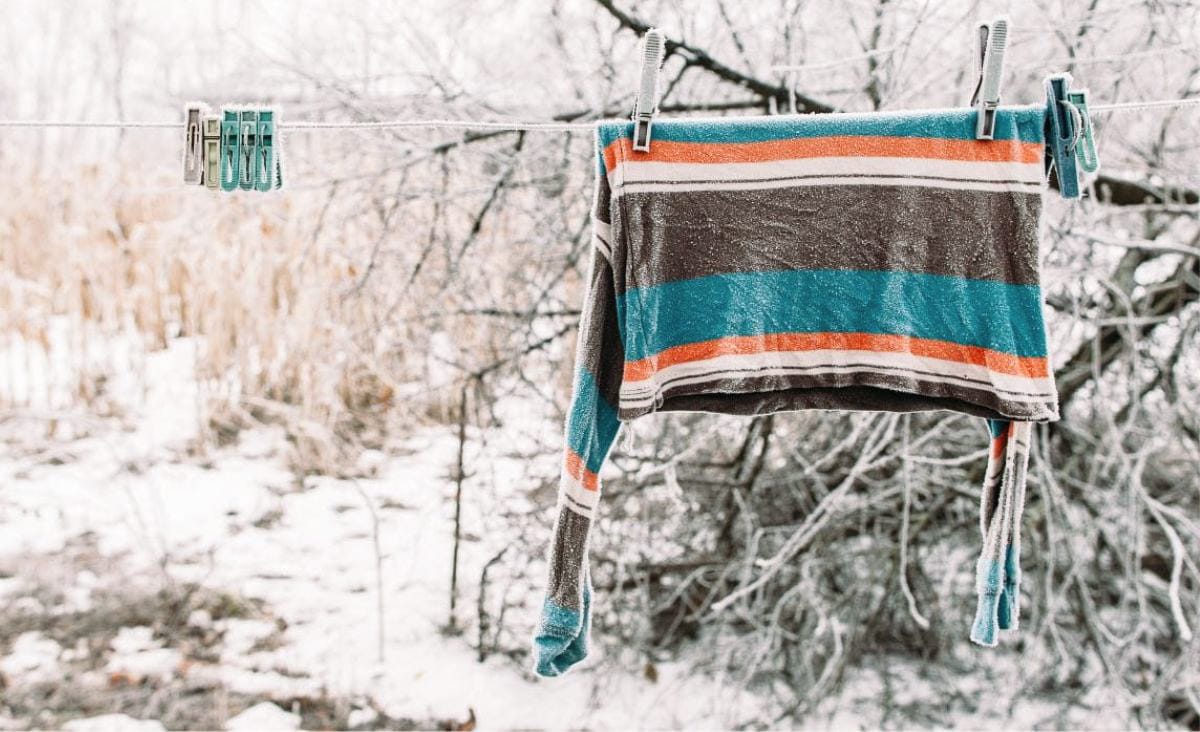
If you’ve ever wondered whether clothes can dry outside in the winter, you’re not alone. The first time I tried it in Maine, I wasn’t convinced anything would happen besides my laundry freezing into stiff boards. But it turns out winter line-drying is completely doable, even on those days when the temperature barely bothers to climb above freezing. It just works a little differently than summer drying. Once you understand how sublimation works and learn a few tricks for timing, airflow, and just knowing which things dry easier than others, it’s honestly just another part of winter living.
I’ve been line drying my clothes year-round for years now, and winter has its own rhythm. Some days everything dries beautifully. Other days you’ll want to bring things inside halfway through. In this post, I’ll walk you through what works, what doesn’t, and how to make winter drying less of a guessing game.
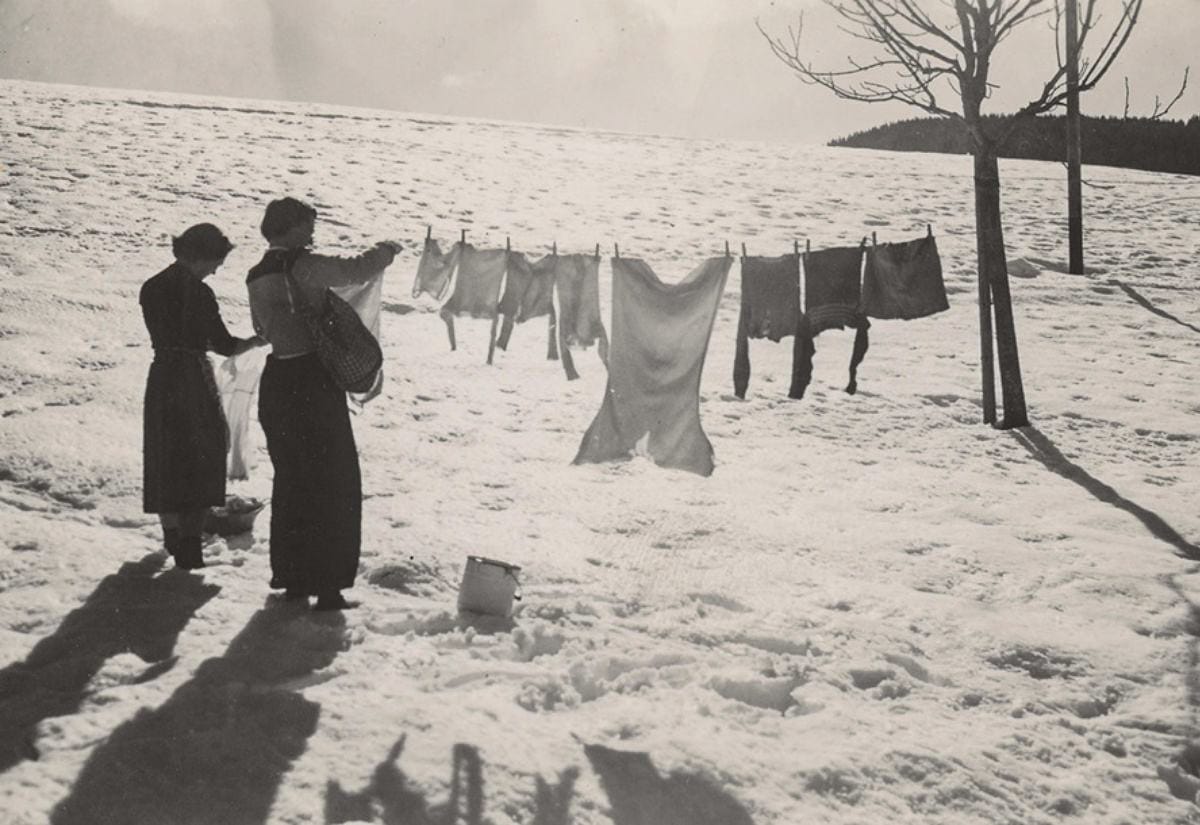
How People Dried Clothes in Winter Before Dryers
Before electricity, winter laundry happened one of two ways:
Outside whenever possible.
Winter sun and good old sublimation (more on that below) did the job, long before we had fancy clotheslines or synthetic fabrics.
Inside on racks and beams.
People used everything: open rafters, wooden racks, backs of chairs, ropes near the stove, and fold-down ceiling racks. Homes were a lot draftier in those days, which actually made indoor drying easier than it is in our sealed-up modern houses.
The funny part is that winter laundry “problems” are mostly modern problems. Past generations treated winter drying as completely ordinary.
How Winter Drying Works (Yep, Even Below Freezing)
Clothes don’t dry in winter the same way they do in summer. When it’s cold, the moisture inside the fabric turns to ice, and then that ice turns straight into vapor. That jump, solid straight to vapor, is what we call sublimation. There’s no soggy in-between stage.
You’d think winter sun wouldn’t do much, but it’s stronger than it looks. Snow reflects UV light back up onto the fabric, which gives you a little natural whitening boost for whites and linens. I count on this snow-bleaching boost every winter, especially for bedding.
How I Dry Clothes Outdoors in Winter
Drying outside in winter takes a little more planning than it does in summer, but it really does become second nature after a bit.
Choose the Right Day: Winter drying goes a lot smoother on sunny, breezy, low-humidity days. Even weak winter sun still gets the job done because sublimation doesn’t need heat.
Start Early: You only get so many hours of workable daylight. If you start after lunch, you’ll almost definitely be finishing inside.
Shake Items Before Hanging: This removes loose water and helps prevent garment edges from freezing into stiff shapes.
Hang Things with Plenty of Space: If items touch, ice builds up between them. Leave gaps so air can move freely.
Avoid Heavy Folds: Keep towels, jeans, and sweatshirts spread out as much as you can. The more surface area showing, the faster sublimation does its thing.
Bring Items Inside at Dusk: Once the temperature drops again, drying slows dramatically. I bring laundry in when the sun disappears and let it finish on a rack overnight.
If you’re new to outdoor drying or want to tighten up your routine a bit, I have a full guide on how to dry your clothes outside like a pro. It covers spacing, airflow, and line setup. All those little tricks that make the job easier.
How Long It Really Takes for Clothes to Dry in Winter
Timing depends on the day’s weather. Here’s a general idea based on my experience in Maine:
- Sunny, breezy day around freezing: 4–6 hours
- Cloudy but cold day (teens–20s): 6–10 hours
- Below 10°F or on really damp days: You can still dry clothes, but it’ll be slow, so expect to finish things inside.
If something still feels stiff after a full day, that’s just ice. Bring it inside and the stiffness disappears as the ice melts and the fabric finishes drying.
Troubleshooting Common Winter Drying Problems
- Your clothes dry too slowly: Humidity is usually the culprit. Snowstorms, fog, or still air can slow everything way down. Switch to indoor drying on those days.
- Everything is stiff as a board: Totally normal. The stiffness is frozen moisture. It disappears once the fabric warms up indoors.
- Items freeze to the line: It’s usually because the hems were still dripping. Shake things twice before hanging. Two clothespins per corner helps with the heavier stuff.
- Laundry smells “cold” or musty: Cold air just doesn’t freshen things as fast as warm air does. Finish-drying indoors cures this, especially for thick fabrics.
Best Ways to Dry Clothes Indoors in Winter
I love drying outside, but there are days when the wind cuts right through you, and I’m not interested in wrestling frozen jeans. When that happens, these are my go-tos for drying inside:
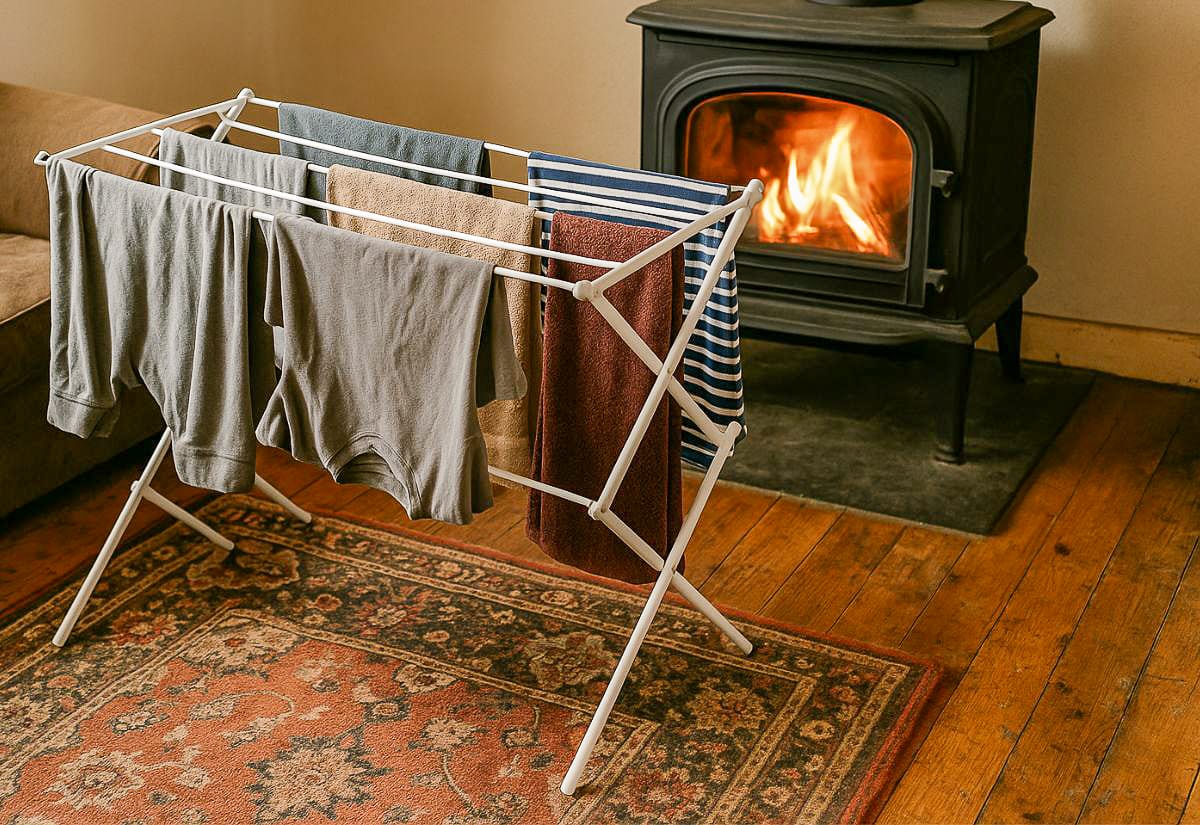
Use a folding rack near a heat source: Not directly on the heater, just near enough to benefit from warm airflow. This is the exact folding rack I use, and what I love about it is how lightweight it is. I can pop it open with one hand and move it around the house wherever the warm air is. It also folds flat when I’m done with it.
Try a wall-mounted pulley rack up near the ceiling: It keeps clothes high where warm air gathers and frees up floor space. I have this retractable clothesline in the room my woodstove is in. I can pull the line out when I need it, hang a full load, and then retract it when I’m done. And it was under ten bucks when I bought it.
Run a fan on low: Air movement does more for drying than heat alone. Even a little tabletop fan on low can make a surprising difference.
Use a dehumidifier in especially damp homes: This helps a ton if you’re in a tight, energy-efficient home that tends to trap moisture. If you heat with a wood stove, the extra moisture from your laundry is usually a blessing.
If you’re trying to keep bulky items from taking over your kitchen (I see you, queen-sized duvet), finishing outdoors first and then drying indoors is still my favorite winter strategy.
Common Winter Drying Questions
If you’re still unsure about winter drying, these are the questions I hear the most.
Pin this guide so you’ve got it on hand the next time the weather turns cold and laundry day sneaks up on you.
Drying clothes in the winter doesn’t need to be complicated or uncomfortable. Once you understand how sublimation works and get into the habit of starting early, spacing items out, and finishing indoors when needed, it becomes part of the winter routine and fits right into everyday homestead life. Whether you’re taking advantage of that bright winter sun or relying on a sturdy indoor rack, winter drying is frugal, low-waste, and totally doable.
If you’ve found a winter drying trick that really works for you, I’d love to hear it. Tell me how you handle laundry this time of year.
My MIL has a clothesline in her basement and that is where she hangs all of the laundry to dry. Uses the dryer for towels only.
I like to put mine out at night, especially windy ones, so I don’t have to worry about getting them out all day. They are already there. The windy days and nights even makes your jeans and sometimes towels soft!
We have a wood burning furnace. It is a warmth factor 1st as these modern gas furnaces that are ‘energy effeciant’ keep running and running to keep you warm using a lot of fuel (#2) saving. Heating with wood saves us a lot of $$$ even if we are cutting, splitting, stacking the wood ourselves (exercise!!!). We line dry our cloths in the basement next to the furnace. As we have updated the house (windows, insulation, siding) it has become more airtight (great for keeping the warmth in) we like the moisture that drying the cloths in the house brings. We still use the dryer mostly on air fluff to get lots of lint removed and to soften the cloths. BUT if it is nice out I will hang all laundry outside.
Keep telling yourself that lol. Hey, I’ve lived in both modern and middle of nowhere areas. I’ll take natural gas furnaces over anything else. The amount of people cutting, splitting, and fetching their own wood without a cost is miniscule. Most at the least buy the cords and cut and split themselves. And not manually. So there are costs of gas and electricity on top of buying the logs.
The cost of a NG furnace keeping every square inch of the home at 72c is $85/m for 2800sqf. When I had to buy wood to get going before getting my own from my property, it was $1200 for wood. And I can say without a doubt, 90% of people ha to buy the wood 100%.
I also had 2 wood stoves, basement and main floor. There were so many cold spots, and the 2nd floor, well you might as well have slept in a tent in the snow. So we had to get heat pumps which are inefficient in Canadian winters, costly to run, and again only heat where they blow.
I live in North East Connecticut and although I am not a homesteader (I work a 50+ hour a week office job) I would not think to dry my clothes any other way than on the clothes line …..all year long. Temperature is not the issue, the humidity level is key. A good breeze always helps as well. I check the weather to see if it’s a good “clothes washing” day. I was the only mom at my children’s day care that used cloth diapers. My children were born 18 months apart (2000 + 2002) so there were a lot of diapers on my clothes lines. I also never used bleach on the diapers as I did not want to have those chemicals so close to their skin (or go down my drain and contaminate my well) so I used a washboard to scrub them before washing them and they were always spotless and white. When back packing through India I saw woman cleaning their closes on rocks…..their clothing was spotless. I did know an elderly lady from Block Island, RI. who said she saw sheets split in the wind in the winter. I would guess those sheets were not rung out as well as our modern washing machines spin our clothes out and there was too much moisture in them. I have never had a problem with my clothes splitting. I hung sheets out this morning at 10F. They quickly got stiff but within two hours they were flapping in the breeze, most of the moisture removed. Nothing like falling asleep on crispy fresh smelling sheets.
thanks for sharing great ideas.
My grandmother (born in 1902) was raised in northern Michigan and told me about her mother drying outside in the winter. Thank you for the nice memory of one of Grammie’s stories.
Mr. Zeiger is correct with the caution about wind. Up here in Canada one would think that more people would line dry as it is an effective way to save on the cost of running the dryer. It’s very rare to see anything hung at any time of year though. I guess that, for many, the convenience of the dryer outweighs the cost in time required to line dry despite the benefits. There are also those who route their dryer vents inside during the winter months as they believe that it helps heat the house. I’m not going to tell anyone what to do in their own home but one would think that the moisture freezing the windows to opacity would be a bit of a giveaway as to why they cough a lot.
Unfortunately this doesn’t work in areas like Oregon where it’s mainly rainy. :/
On windy days, heavy duty clothespins like these will be helpful http://www.popotamus.net
My Mom was a Farm girl living in Southern Iowa. She told me of how they freeze dried their cloths by hanging them out side. Once dried they would bring them in and iron them – which old be a long process since th iron would be headed on the wood burning stove. They had very few options as they didn’t even get electricity until she was 16 years old.
I loved this post! Very informative. I try to line dry bedding when I can. It does make it fresher. Nice post.
If I tried to line-dry clothes in the Winter I’d have to leave them out there until Spring.. We get so much lake effect snow up here in Upstate NY that the clothes would just get covered with snow and I’d have to dredge through several feet of it to get to the clothes lines. It also can go down to negative 15 degrees for weeks at a time and not only would it be brutal to hang them up but when it’s that cold, I find it hard to believe that the clothes would dry even if it didn’t snow for several days – which it surely would… So it’s an interesting suggestion, but it unfortunately, it doesn’t work for everyone.,,,
I LIVE OUTSIDE OF BUFFALO,NY AND I LINE DRY OUTSIDE AND INSIDE FOR 2 YEARS NOW