
How to Make Elderflower Cordial from Foraged Elderflowers
Make this elderflower cordial recipe with foraged flowers, lemon, sugar, and citric acid for a sweet summer drink syrup.
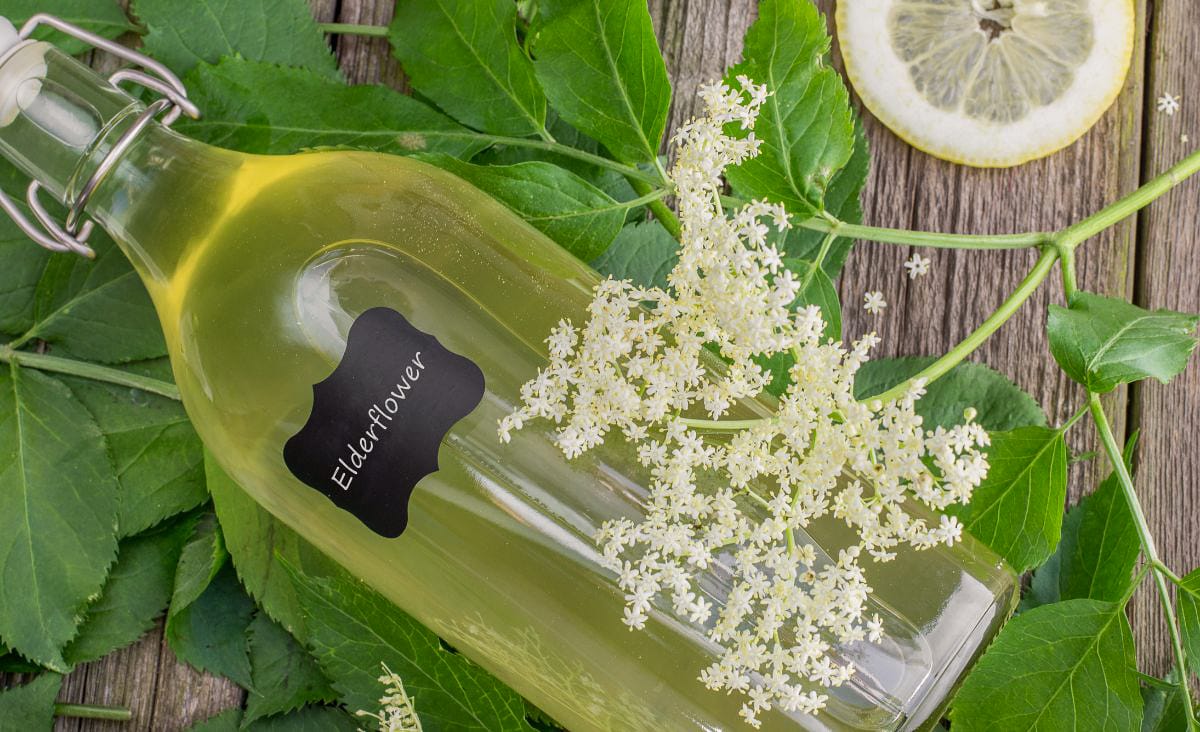
Every year, right around the time Maine finally decides we’re allowed to believe in summer, the elderflowers start showing up. Here that usually means late June into early July, which is also when the garden is needy, the weeds are enthusiastic, and I’m trying to convince myself I can squeeze one more project into the day.
Elderflower cordial is one of those recipes that feels worth the extra little bit of effort. You get this sweet, floral syrup that tastes light, lemony, and a little wild, and you can stretch it into drinks, iced tea, sparkling water, cocktails, mocktails, or whatever cold thing you’re reaching for after being eaten alive by mosquitoes.
I’ll walk you through the picking, the steeping, the bottling, and the part where you finally get to pour it into a glass and decide it was worth the sticky counter.
How to Safely Forage Elderflowers
Before we get into the recipe, we need to talk about the picking part. Elderflower cordial is only lovely if you’re harvesting the right plant. Elderflowers come from elderberry shrubs or small trees. They grow on woody, bark-covered branches. That matters. A lot.
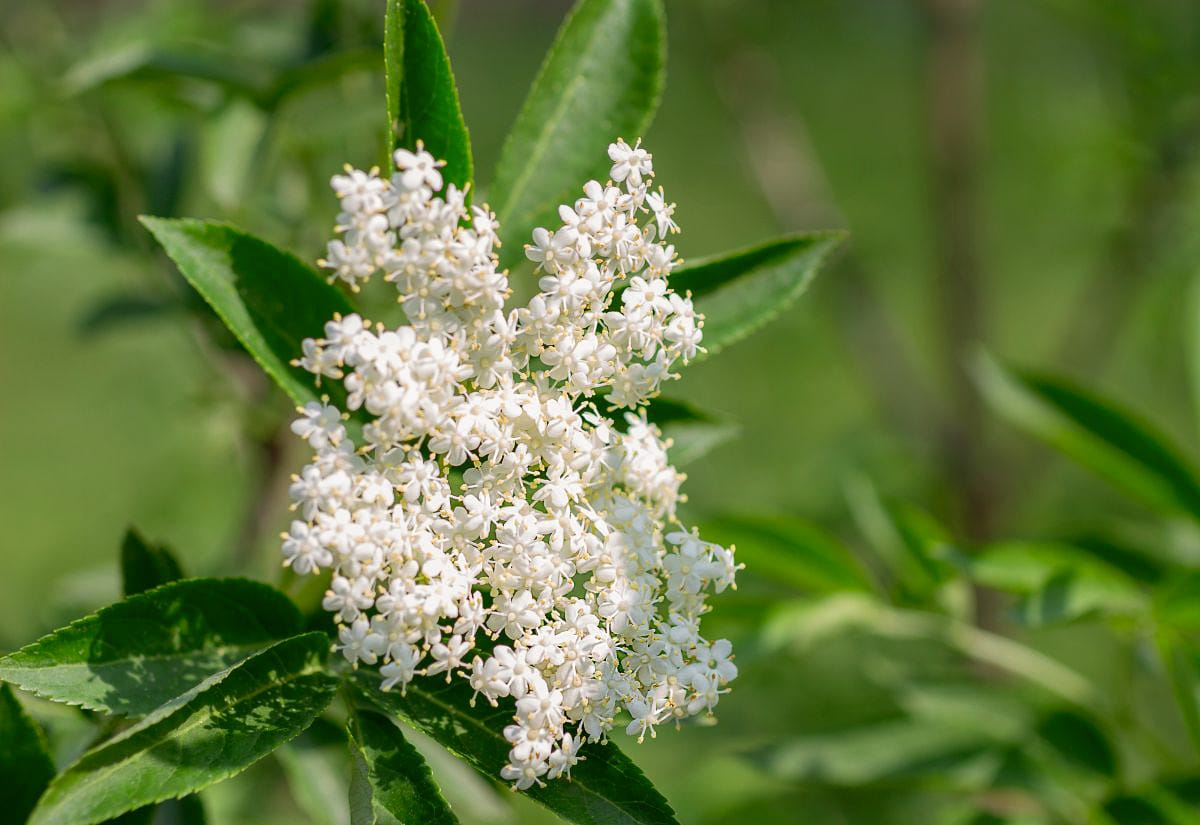
Don’t go by the flower cluster alone. A lot of white-blooming plants show up around the same time, and some of them are not kitchen plants. If the flowers are growing from a green stalk straight out of the ground, leave them there. Take photos. Go home. Check again.
If I can’t clearly see woody growth and elderberry leaves, I don’t pick from that plant.
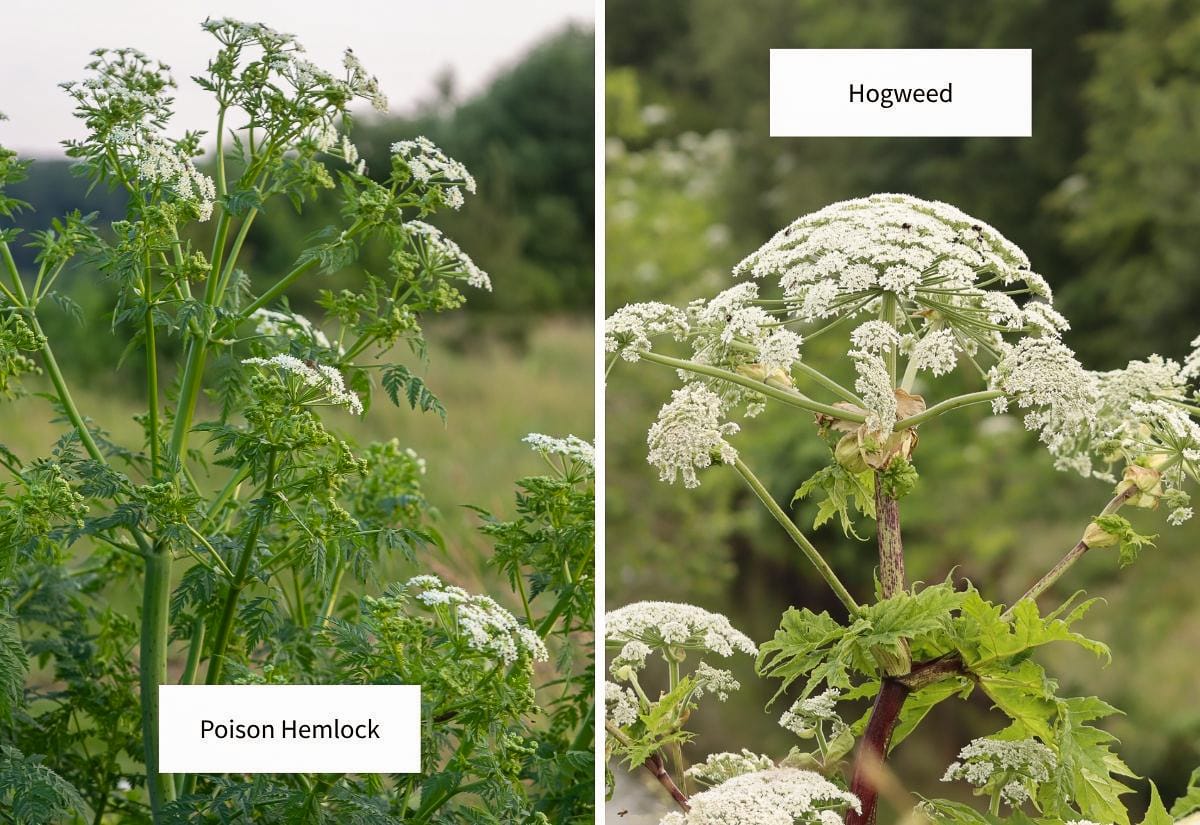
If wild foods still make you a little nervous, that’s not a bad thing. Start with some beginner-friendly foraging basics before you head out with a basket.
What Elderflowers Look Like
Elderflowers grow in wide, flat clusters made up of many tiny cream-colored flowers. The clusters look airy and delicate, not like a tight ball.
The leaves are arranged opposite each other along the stem, and the plant itself has woody growth. Depending on where you are, elderberry shrubs can grow along field edges, old roadsides, sunny woodland edges, and damp areas.
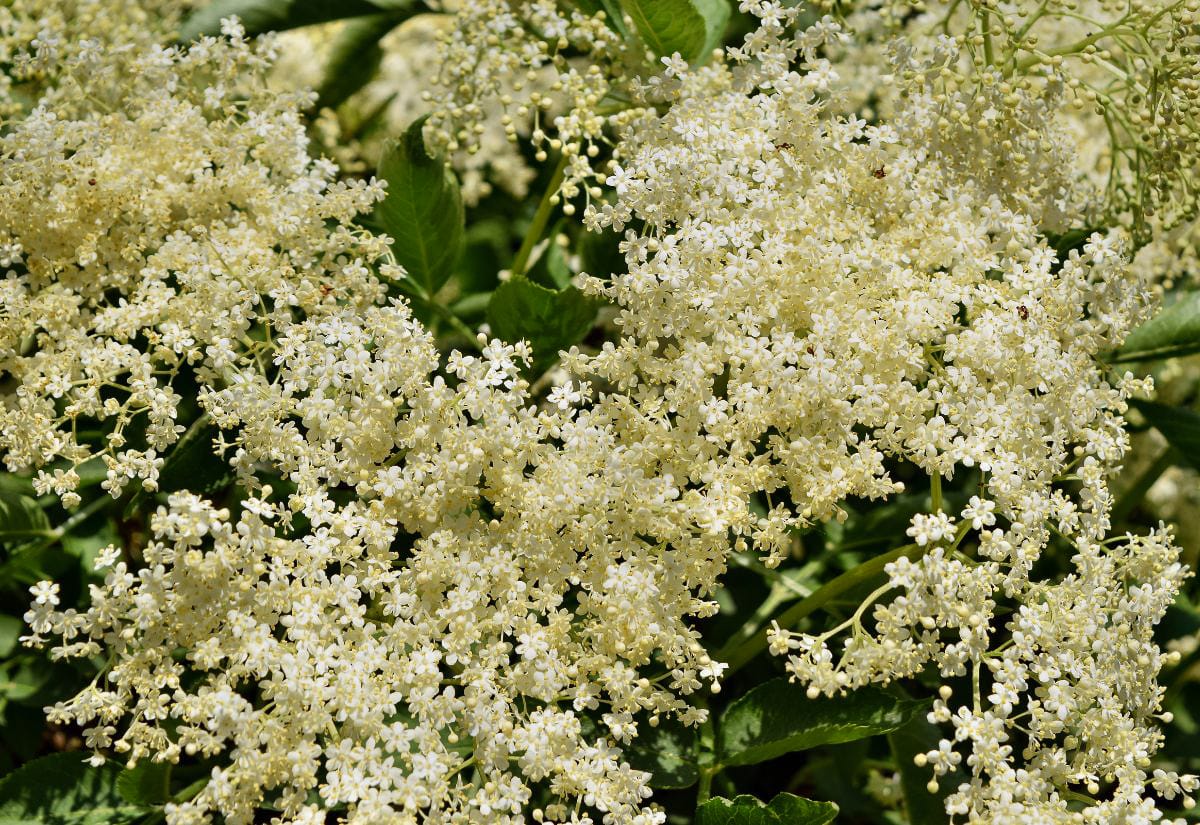
The flowers should smell sweet and floral. If they smell musty, sour, or just plain off, skip them. I know it can feel wasteful when you finally find a patch, but bad-smelling flowers will not make good cordial.
What Not to Pick
Don’t pick white flowers from plants you can’t identify with confidence. Don’t pick from roadsides where plants are getting sprayed or covered in traffic grime. Don’t harvest from an area that may have been treated with herbicides or pesticides. And don’t pick all the flowers from one shrub. Those flowers turn into elderberries later, and the birds, wildlife, and future-you may want some of those berries. I like to take a little from a healthy patch and move on.
When to Harvest Elderflowers in Maine
Here in Maine, I usually look for elderflowers from late June into early July. The exact timing depends on the weather, your location, and whether spring dragged its feet, which it often does because apparently we enjoy character building.
Pick on a still, dry day when it hasn’t rained in the last 24 hours. You want the pollen still on the flowers because that’s where so much of the flavor is hiding. Morning is my favorite time to harvest. The flowers smell sweetest then, and they haven’t been sitting in the heat all day. Choose flower heads that are fully open, fresh-looking, and not turning brown or dropping petals.
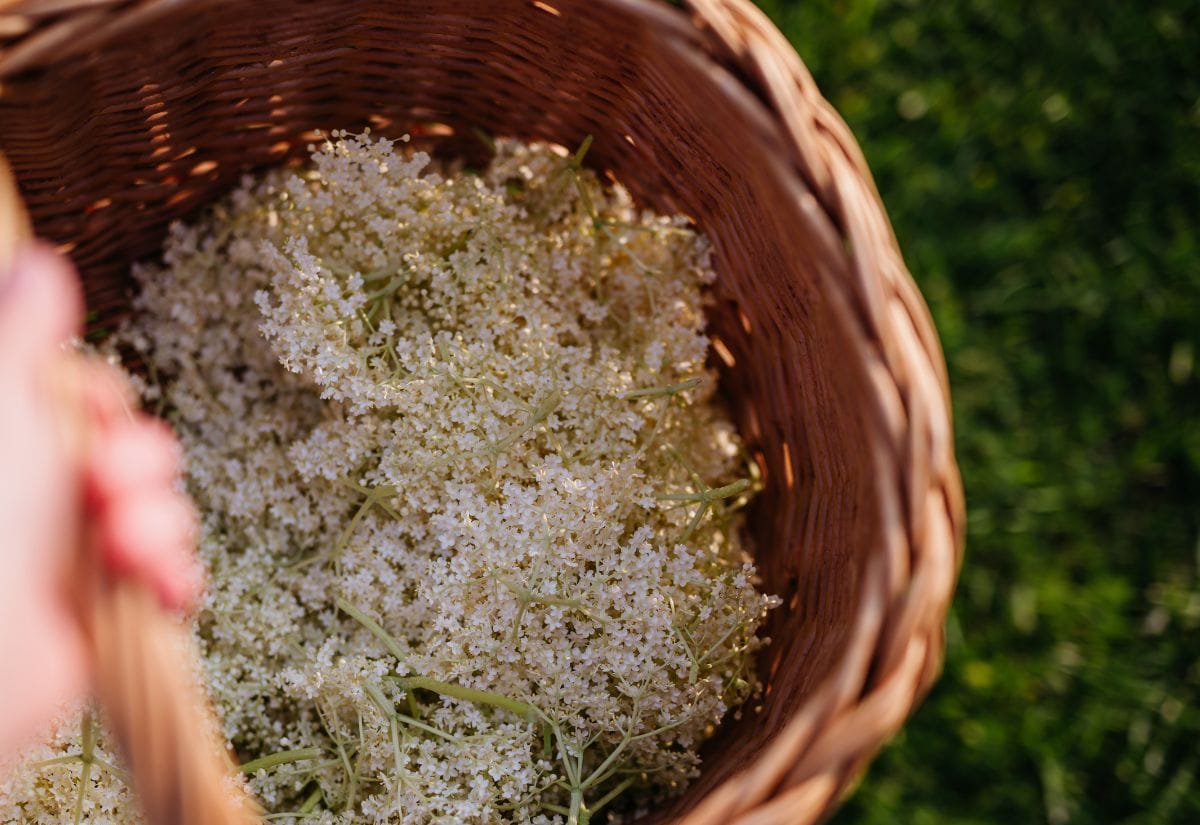
Elderflowers don’t stick around long, which is why I like keeping track of what’s ready when here in Maine.
What You Need to Make Elderflower Cordial
Elderflower cordial is simple, which is one reason I like it. You’re basically making a floral syrup by steeping elderflowers with lemon and citric acid, then adding sugar and bottling it.
The recipe card below will have the exact amounts, but you’ll need fresh elderflower heads, lemons, water, sugar, and citric acid. I wouldn’t skip the citric acid in this recipe. You’ll usually find citric acid with canning supplies, baking ingredients, or online. It keeps the cordial from tasting like plain flower syrup. Without it, elderflower cordial can taste a little flat. Still sweet. Still floral.
You’ll also need a large pan, a fine cloth or muslin for straining, clean bottles, and a funnel. I like using swing-top glass bottles because they seal well and pour neatly. Also, I’m much less likely to lose the lid, which is not nothing in my kitchen.
A quick note on the elderflower heads… flower size varies a lot. If the heads are large and full, use the amount listed in the recipe card. If your flower heads are sparse, newly opened, or only a few inches across, count them as small. If they’re small, you may need closer to double.
How to Make Elderflower Cordial
The hands-on part is easy. The waiting is where the flavor happens. The steeping time is what pulls that floral flavor into the water.
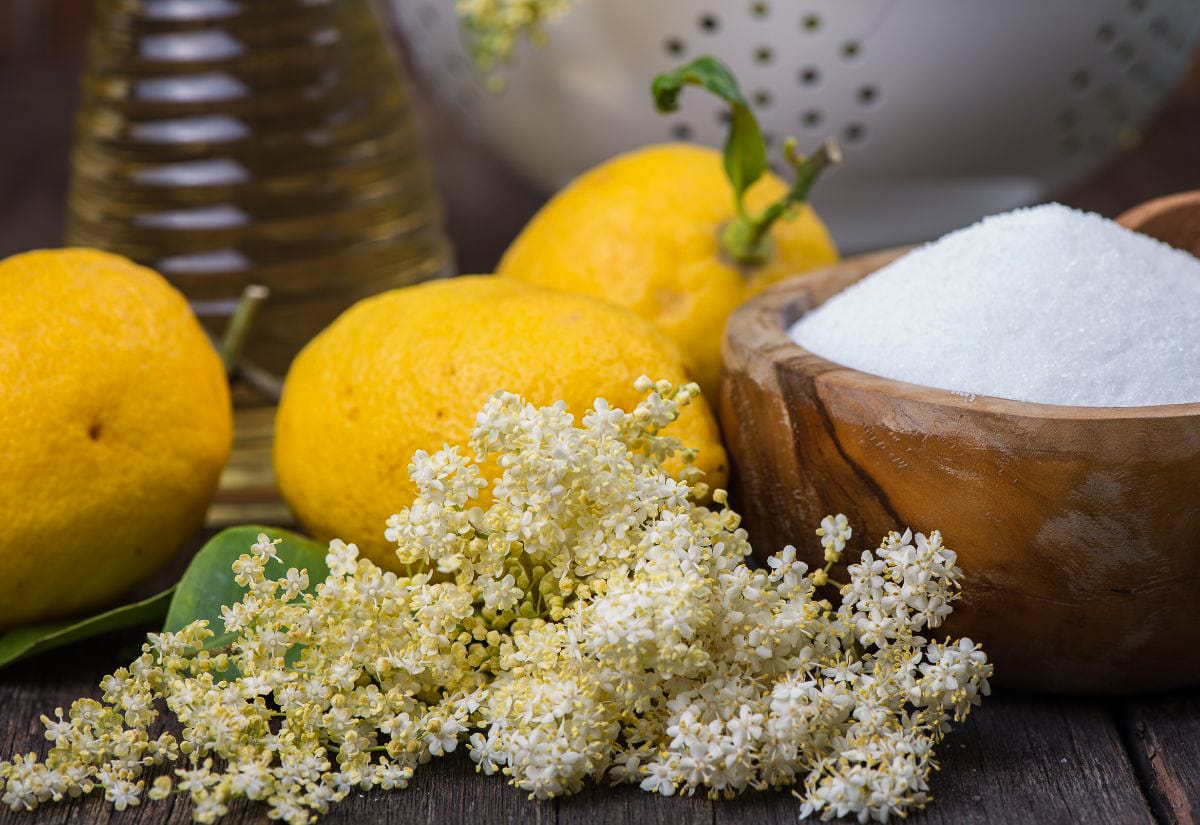
Check the Flowers, but Don’t Wash Them
Don’t wash the elderflowers.
The flavor is in the pollen, and rinsing the flowers washes away a lot of what you came for. Instead, give each flower head a gentle shake outside to knock off any little bugs. Check for dirt, dead leaves, or insects, and remove anything you don’t want in the pot. A few little bugs are part of foraging. I don’t love that sentence either, but there it is.
Steep the Flowers with Lemon + Citric Acid
Add the elderflower heads, sliced lemons, and citric acid to the water in a large pan. Don’t add the sugar yet.
Heat the mixture until it reaches the boiling point, stirring now and then. You’re not trying to boil the flowers hard. You just want the water hot enough to pull out the flavor. Once it gets there, remove the pan from the heat, cover it, and let it steep overnight. If you’re short on time, give it at least four hours, but overnight gives the flavor more time to develop. By the next day, the liquid should smell floral and lemony. It will not look especially exciting. That’s fine. Some of the best homestead things look questionable halfway through.

Strain + Sweeten the Cordial
Strain out the flowers and lemon slices with muslin, cheesecloth, a jelly bag, or a clean flour sack towel. I do squeeze the cloth, but gently. I want the flavor, not a pan full of flower bits. Once the liquid is strained, return it to the pan and add the sugar. Bring it back to a boil, stir until everything dissolves, and simmer for about five minutes. After that, it’s bottling time.
Bottling, Storing, and Serving Elderflower Cordial
Homemade cordial is wonderful, but it’s not the place to get casual with clean bottles or storage. Even with sugar and citric acid, I don’t consider this a pantry-safe canned recipe. Homemade elderflower cordial goes in my fridge or freezer.
Bottle it While Hot
While the cordial simmers, wash and sanitize your bottles, lids, funnel, and tools. Hot soapy water works, followed by a good rinse and boiling water in the bottles for several minutes. If your dishwasher has a sanitize setting, that works too. Pour the hot cordial into warm bottles. Not cold ones. Hot cordial plus cold glass is how you get cracked bottles, sticky counters, and a new vocabulary. Close the lids and let the bottles cool.
How to Store Elderflower Cordial
Once the cordial has cooled, store it in the fridge. If you know you won’t drink through it quickly, freeze part of the batch before it gets forgotten in the back of the fridge. You can freeze cordial in freezer-safe jars with plenty of headspace, or pour it into ice cube trays and freeze it in smaller portions. The cubes are handy because you can drop one or two into sparkling water or iced tea without thawing a whole bottle.
If you love elderflower, it’s worth remembering that the flowers you leave behind can turn into berries later in the season. That’s when I switch from floral summer drinks to homemade elderberry syrup.
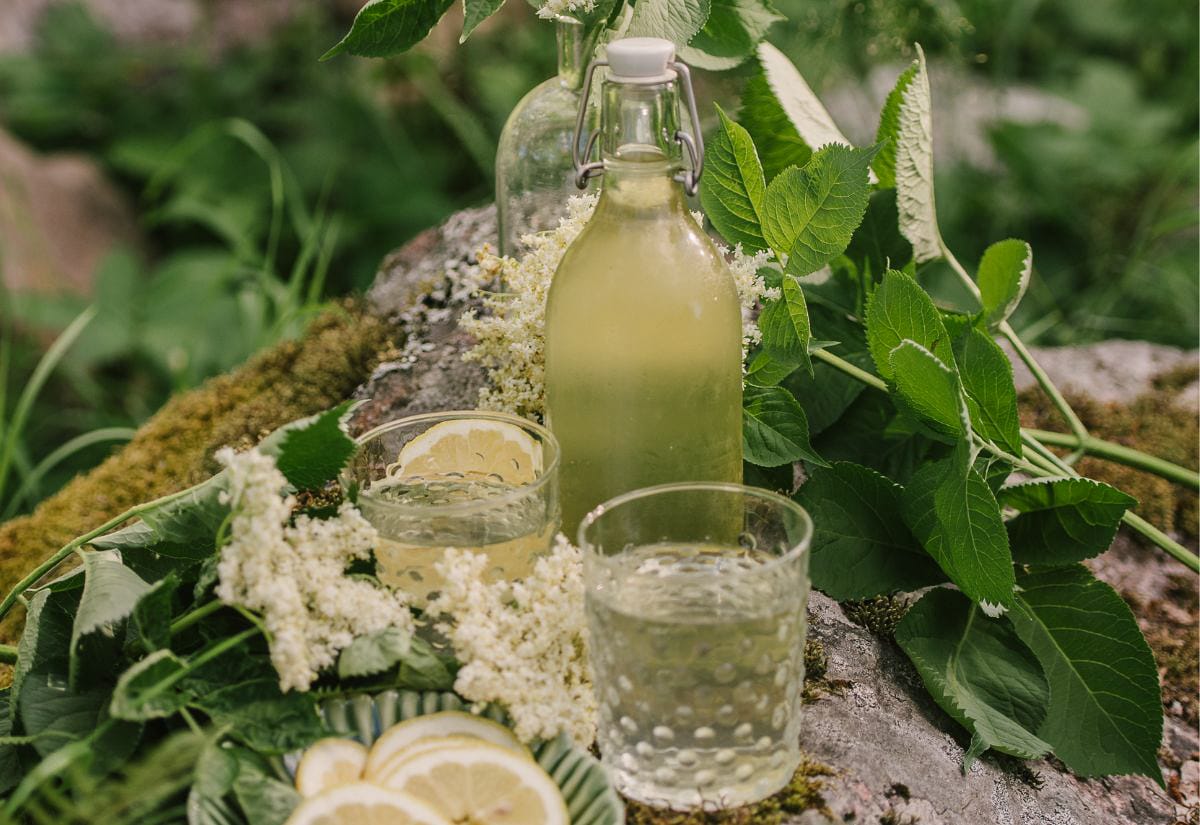
How to Serve Elderflower Cordial
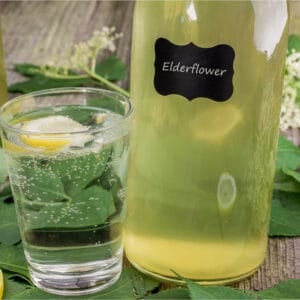
Elderflower cordial is concentrated, so unless you want a mouthful of sweet flowers, dilute it. Start with around one part cordial to five parts water. If you want it lighter, go closer to one part cordial to ten parts water. I like it with sparkling mineral water and a squeeze of fresh lemon.
It’s good in iced tea too, especially on the kind of day when you’ve already been outside too long. If that sounds like your kind of thing, you may like these homemade iced herbal tea combinations.
If cordial recipes are your kind of rabbit hole, raspberry cordial is a good one to save for berry season.
A Few Elderflower Cordial Questions
If this is your first batch, you’ll probably have a question or two before the bottles are lined up on the counter.
Pin this elderflower cordial recipe so you have it handy when the shrubs start blooming.
Elderflower cordial is one of those recipes that makes me slow down for a minute during one of the busiest times of year. The flowers don’t wait around forever, so when they’re blooming, I try to make at least one batch. I also try to leave plenty behind because elderberries are worth waiting for later in the season. That balance is part of good foraging: take what you’ll use, leave enough for the plant, the birds, and another harvest.
If elderflowers are blooming near you and you’re sure of your ID, this is a simple way to bring some of that short season back into the kitchen. If you make it, I’d love to hear how you use yours. Sparkling water? Iced tea? Something completely different that I’m going to want to try next?
Elderflower Cordial Recipe
This post may contain paid links. If you make a purchase using the links in this recipe, I may earn a commission.
Equipment
- 1 Fine Mesh Strainer or muslin cloth, jelly bag, or fine straining cloth
- 1 Funnel
- 6 Swing-Top Bottles 16 oz.
Ingredients
- 15 large Elderflower Heads or up to 30 small heads
- 2 Lemons sliced
- ¼ cup Citric Acid
- 10 ½ cups Water
- 5 cups Sugar
Instructions
- Check the elderflower heads carefully for dirt, insects, and debris. Do not wash them, since rinsing removes much of the flavorful pollen.15 large Elderflower Heads
- Add the elderflower heads, sliced lemons, citric acid, and water to a large pan. Do not add the sugar yet.2 Lemons, ¼ cup Citric Acid, 10 ½ cups Water
- Heat the mixture until it just reaches the boiling point, stirring occasionally. Remove from heat, cover, and let steep overnight, or for at least 4 hours.
- Strain the liquid through muslin, a jelly bag, or a fine cloth to remove the flowers and lemon slices. Gently squeeze the cloth to get out as much flavor as possible.
- Return the strained liquid to the pan and add the sugar. Bring it back to a boil, stirring often until the sugar dissolves.5 cups Sugar
- Simmer for 5 minutes.
- While the cordial simmers, wash and sanitize your bottles, lids, funnel, and any tools you’ll use. Warm the bottles before filling.
- Carefully pour the hot cordial into warm bottles and close the lids. Do not pour hot cordial into cold glass, as it can crack.
- Let the bottles cool, then store the cordial in the fridge. For longer storage, freeze in freezer-safe containers with room for expansion.
- To serve, dilute 1 part cordial with 5 to 10 parts water, sparkling water, or iced tea. Add fresh lemon juice if you want a brighter flavor.
Notes
- Use only elderflowers you can identify with confidence. Elderflowers grow on woody elderberry shrubs or small trees, not from soft green stalks growing straight from the ground.
- Pick elderflowers on a dry morning when the flowers are fully open, fresh-looking, and sweet-smelling. Avoid flowers that are browning, dropping petals, or smell musty.
- Do not wash the elderflowers unless absolutely necessary. Shake them gently outside instead.
- This recipe is not a tested shelf-stable canning recipe. Store finished cordial in the refrigerator and use within 2 to 3 weeks, or freeze for longer storage.
- Freeze cordial in ice cube trays for easy single-serving portions.
- Dilution depends on your taste. Start with 1 part cordial to 5 parts water, then add more water if you prefer a lighter drink.