
How Frost Affects Pectin When Making Rose Hip Jelly
Learn how to make rose hip jelly that sets every time. Discover the best frost timing, pectin ratio, and quick set test for reliable, homemade jelly.
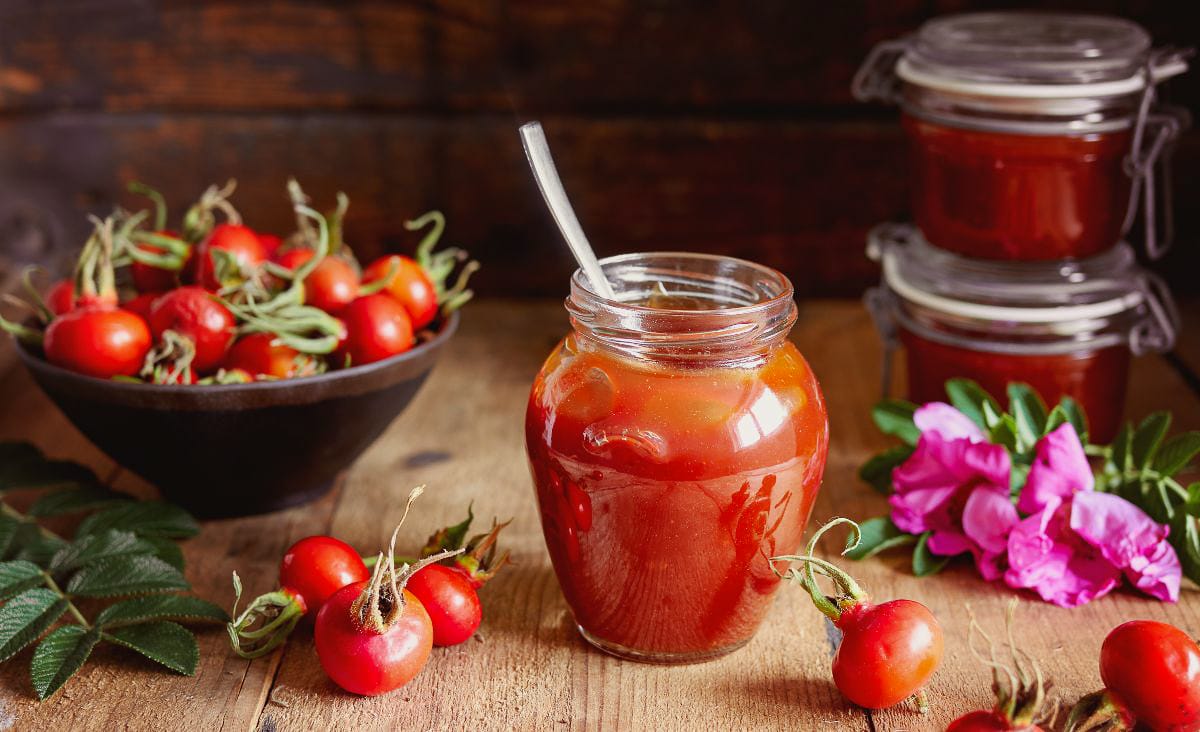
I wait all year for that first chilly snap. The rugosa roses out back turn a richer red, and I grab a bucket and head out while the boys argue over who gets the taller pair of clippers. If you’ve ever wondered whether waiting for frost really matters, how much pectin rose hips actually have, or why some batches set while others stay syrupy, you’re not alone.
I’ll show you how I pick and prep my hips, what I’ve learned about pectin, the quick set test I swear by, and the simple jelly recipe I make every fall. If you’re new to canning and want a quick refresher, I’ve got practical water bath canning tips for new canners that pair well with this recipe.
Why Harvest Timing Matters
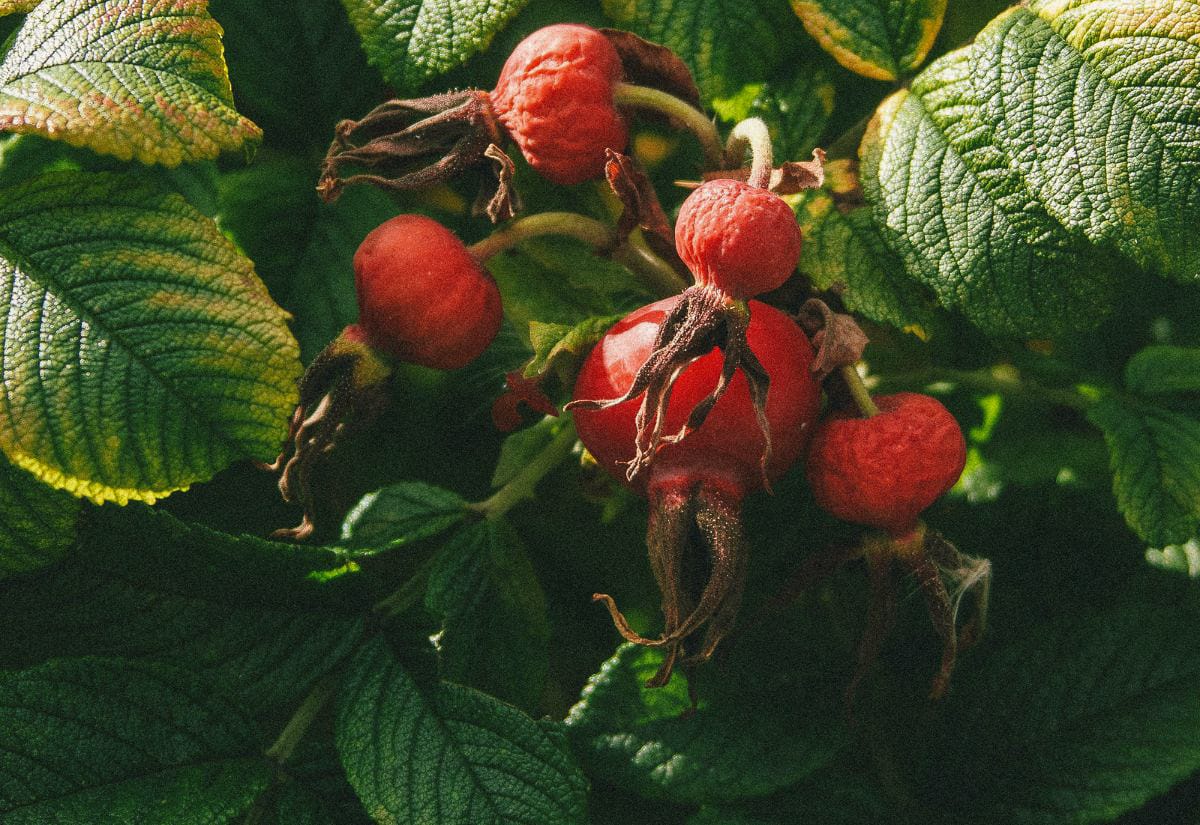
I live in western Maine. Our first frost usually lands late October into early November. After that first light frost, the hips soften up and mellow out. They’re less tart and a little sweeter. The jelly finishes with a rounder flavor, and I get juice more easily. If I pick early, when they’re red but still firm with a hint of green, I can still make jelly, but it takes a longer boil and usually a full packet of pectin to get a good set.
Pick on a dry morning after the frost. Wet hips make for cloudy juice, and you’ll be waiting forever for it to drip clear.
How I Pick Hips in Maine
- I stick to bushes well away from roads or anywhere that might’ve been sprayed. The big rugosa hips are my favorite.
- Look for fully red, slightly soft fruit. Skip the mushy or sun-scalded ones.
- Snip the stems while you’re out there. It saves a ton of time later. And trust me, wear gloves unless you enjoy itchy wrists.
If you’re just getting into gathering wild food around here, I put together a simple guide on what to forage in Maine and where to find it.
Juice Yield vs Harvest Timing
Here’s about what I get from 8 cups of hips. Every season’s a little different, but this is about what I get most years.
| Harvest Timing | Juice Yield | What I Notice |
|---|---|---|
| Bright red, before first frost | ~2.5 cups | Firmer fruit, a bit more tang. Often needs longer boil. |
| After one light frost (my pick) | ~3.0 cups | Best balance of flavor, color, and easy straining. |
| Late season, soft post-frost | ~2.2 cups | More pulp and cloudiness. Sometimes a weaker set. |
| Large rugosa hips, good condition | ~3.2 cups | Bigger fruit means better juice per cup picked. |
I usually plan on 8–10 cups of hips to end up with about three cups of juice. If I picked before frost, I aim closer to ten cups. When the hips are big and juicy, seven or eight cups usually does the trick.
Pectin (and Why I Use It)
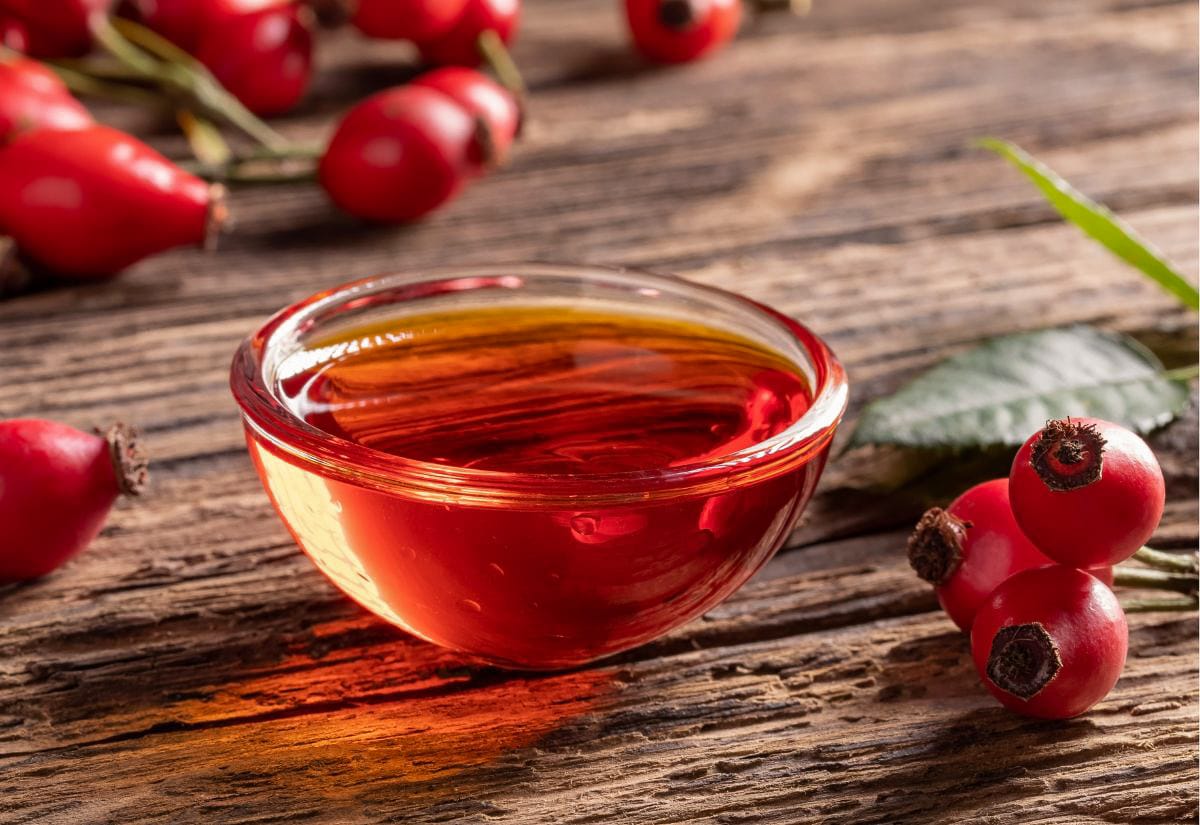
Rose hips have some natural pectin, but not a ton. There’s just enough to give the juice a little body, but not enough to guarantee a firm set. Wild fruit changes year to year, and that can really throw things off.
Could you make no-pectin rose hip jelly? Sure. But I prefer to use a standard box of powdered pectin per 3 cups of juice so I know what I’m getting every time. If you’re curious about low- or no-sugar options (for other fruits too), check out my post on how to make jam without sugar. It actually tastes good.
The Set Test
This takes one minute and saves you from a shelf full of runny jelly.
- Chill a saucer in the freezer before you start cooking.
- After the hard boil (see recipe), drop a small spoonful onto your cold saucer.
- Wait 30 seconds. Tip the plate.
- Set = the surface looks slightly wrinkled and the blob creeps, not slides.
- Not set yet = it runs like syrup. Boil 1–2 minutes more and test again.
You can use a thermometer (most full-sugar jellies set around 220°F) but honestly, I still trust the saucer. It’s fast. It’s visual. It works.
Rose Hip Jelly Recipe (After Frost, Reliable Set)
This post may contain paid links. If you make a purchase using the links in this recipe, I may earn a commission.
Equipment
- Jelly Bag or fine-mish strainer
- Large Stockpot non-reactive
- 5-6 Half Pint Jars
Ingredients
- 8 cups Rose Hips cleaned
- 6 cups Water
- ½ cup Lemon Juice
- 1 package Pectin 1.75 oz
- ¼ tsp Butter
- 3½ cups Sugar
Instructions
- Rinse the hips well and trim off stems and blossom ends. Toss any that are brown or soft.
- In a non-reactive pot, combine the hips with 6 cups of water. Bring to a boil, then cover and simmer for about an hour, until they’re soft enough to mash.8 cups Rose Hips, 6 cups Water
- Mash the hips right in the pot with a potato masher. Set up your jelly bag or cheesecloth over a large bowl or pot and pour in the mash. Let it drain for about an hour, then squeeze gently to get more juice (just don’t press so hard you force pulp through).
- Measure out 3 cups of strained juice. If you’re short, pour a little hot water through the pulp again and let it drip until you reach 3 cups.
- Return the juice to the pot. Add lemon juice and pectin. Bring to a full boil, stirring to dissolve the pectin.½ cup Lemon Juice, 1 package Pectin
- Add sugar and butter. Once the sugar dissolves, bring to a hard rolling boil (it shouldn’t calm down when stirred) and boil for exactly 1 minute.¼ tsp Butter, 3½ cups Sugar
- Remove from heat and skim off any foam. Pour hot jelly into hot, sterilized half-pint jars, leaving ¼-inch of headspace. Wipe the rims and tighten the lids finger-tight.
- Process in boiling water bath for 10 minutes.
- Lift the jars out and let them cool without touching them. You’ll hear the lids pop as they seal. If any don’t seal, stash them in the fridge and enjoy within a few weeks.
Notes
- Don’t use aluminum or cast iron. Choose stainless or enamel-lined pots.
- Seeds and hairs are itchy. You can remove them before cooking, but it adds time. I usually leave them in and strain very well. I can’t taste a difference.
Nutrition
Troubleshooting Your Jelly
- Didn’t set? Re-boil with a little extra pectin. Test again.
- Too soft? You probably had watery juice or pulled it off the heat a little early.
- Too firm or dark? You boiled it too long (been there). It still tastes great on toast, though.
- Metallic note? Check your cookware. Stick to non-reactive.
- Got seed hairs in your jelly? Strain it again through a finer cloth and let it drip on its own. I know it’s tempting to squeeze, but that just makes it cloudy.
If you love having your hands free while picking, my DIY harvest apron tutorial shows you how to sew a simple pouch that holds a surprising amount of fruit. I use mine for everything… rose hips, berries, even a handful of garden tomatoes.
Still Wondering About Making Rose Hip Jelly?
Here are a few things people ask when they’re trying it for the first time.
Pin this recipe now and come back to it when your rose hips are ready after that first frost.
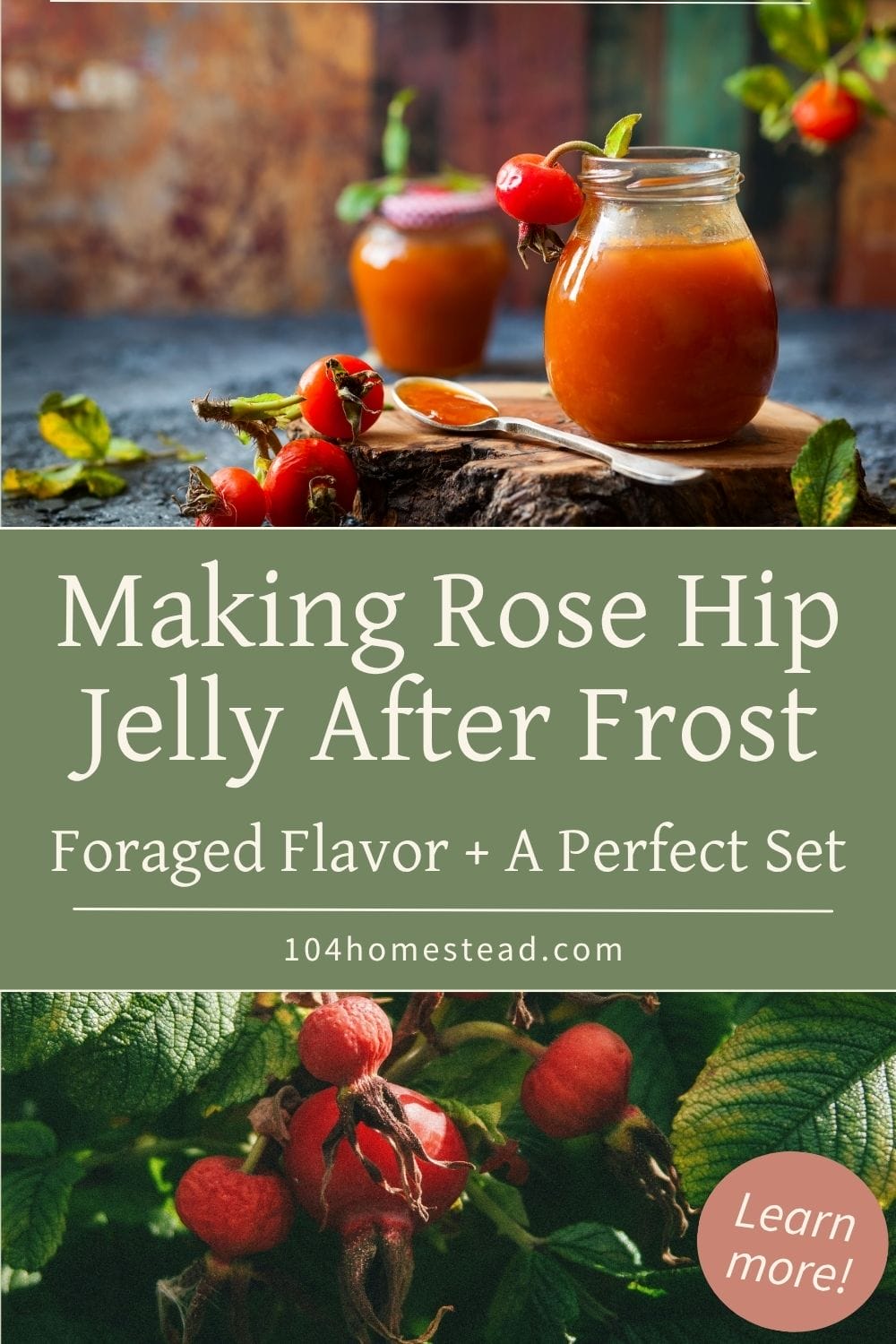
Harvest timing matters. Pectin matters. But mostly, you’ve got this. If you wait for a light frost, use non-reactive pots, and trust the saucer test, you’ll end up with jewel-bright jars that actually set. If you try it, let me know how it goes and whether you picked before or after that first frost.
And if you’re heading out to gather more, peek at foraging edible plants right outside your door for ideas you can turn into winter pantry staples.