
What to Know About Farm Fresh Eggs Before You Crack One Open
Learn how to store, wash, check, and cook with farm fresh eggs, including yolk color, shell thickness, float tests, and baking tips.
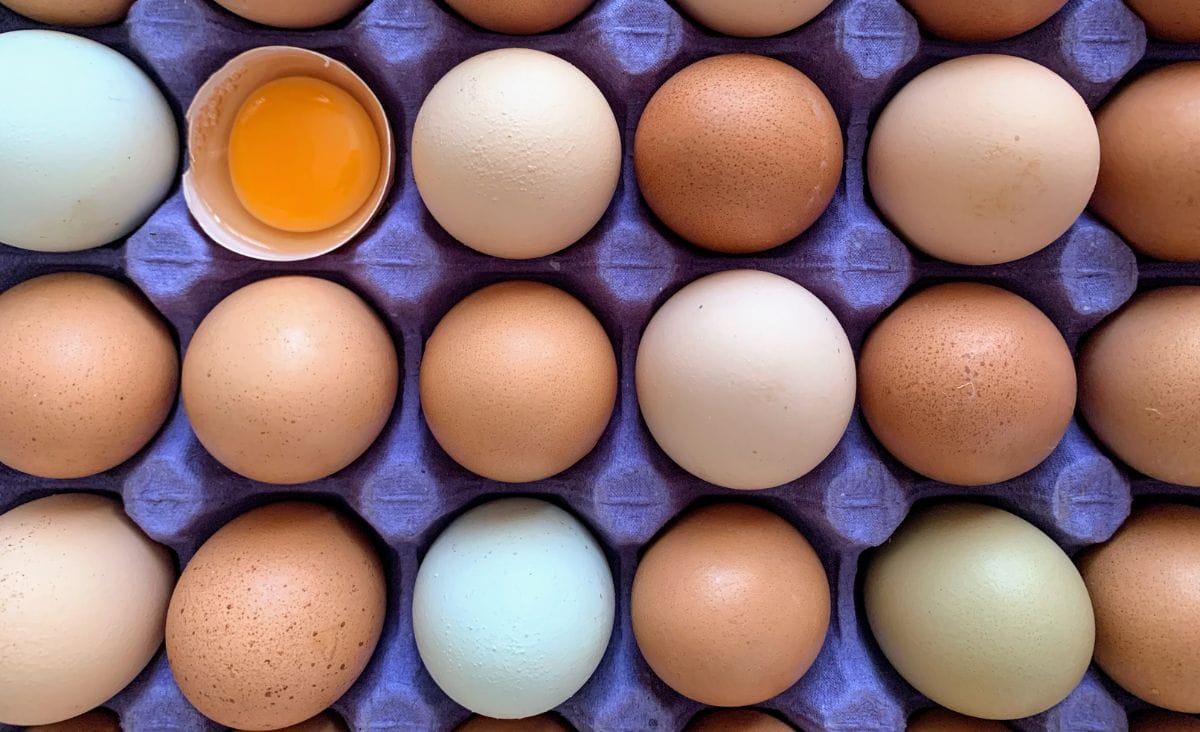
The first time I cracked open one of my own eggs, I remember just standing there for a second. The yolk was deep orange, the white held together in a way I wasn’t used to, and the shell felt thicker than anything I’d bought at the store. It looked different enough that I wasn’t even sure I should cook it the same way.
I’ve learned a lot about eggs through trial and error. Some of it came from raising chickens. Some came from messing up a batch of baked goods because I didn’t think about egg size. And some came from that moment of hesitation when you crack an egg and wonder if it’s still good.
If you’re new to farm fresh eggs, I’ll walk you through what’s normal, what’s not, and what I wish I’d known before I ruined perfectly good baked goods.
What Makes Farm Fresh Eggs Different
Before we get into storing, cooking, and all the “is this egg still good?” panic, it helps to know what makes farm eggs different. Farm fresh eggs aren’t just “nicer” versions of store eggs. They’re fresher, they’re handled differently, and they don’t always behave the way grocery store eggs do.
Yolk Color and Texture
That deep yolk color usually comes from diet. Hens that are eating greens, bugs, and whatever else they find outside will produce darker yolks than hens on a standard grain-heavy diet. I’ve noticed this shift even within my own birds depending on the season. Summer eggs tend to be darker and richer. Winter eggs lighten up when forage disappears.
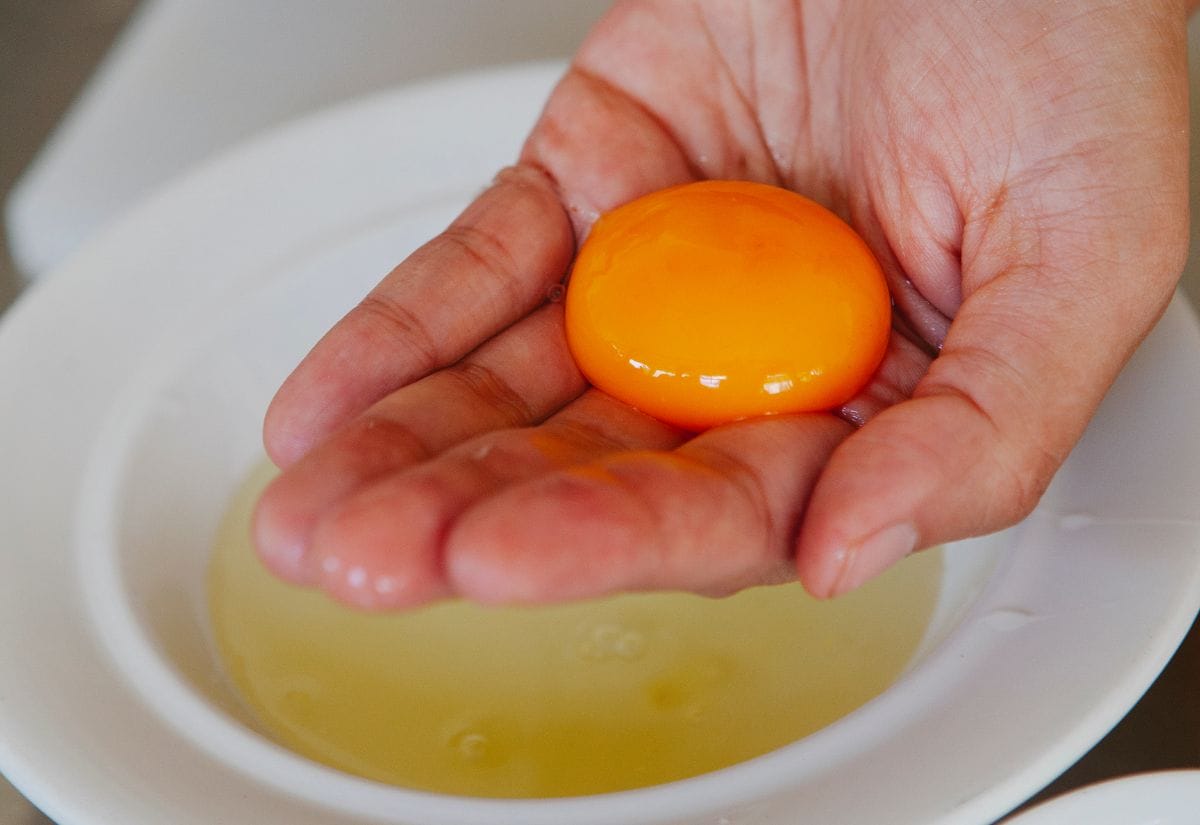
The texture is different too. Fresh egg whites don’t spread all over the pan as quickly, and the yolks usually hold together better. That’s mostly freshness.
Shell Color and Thickness
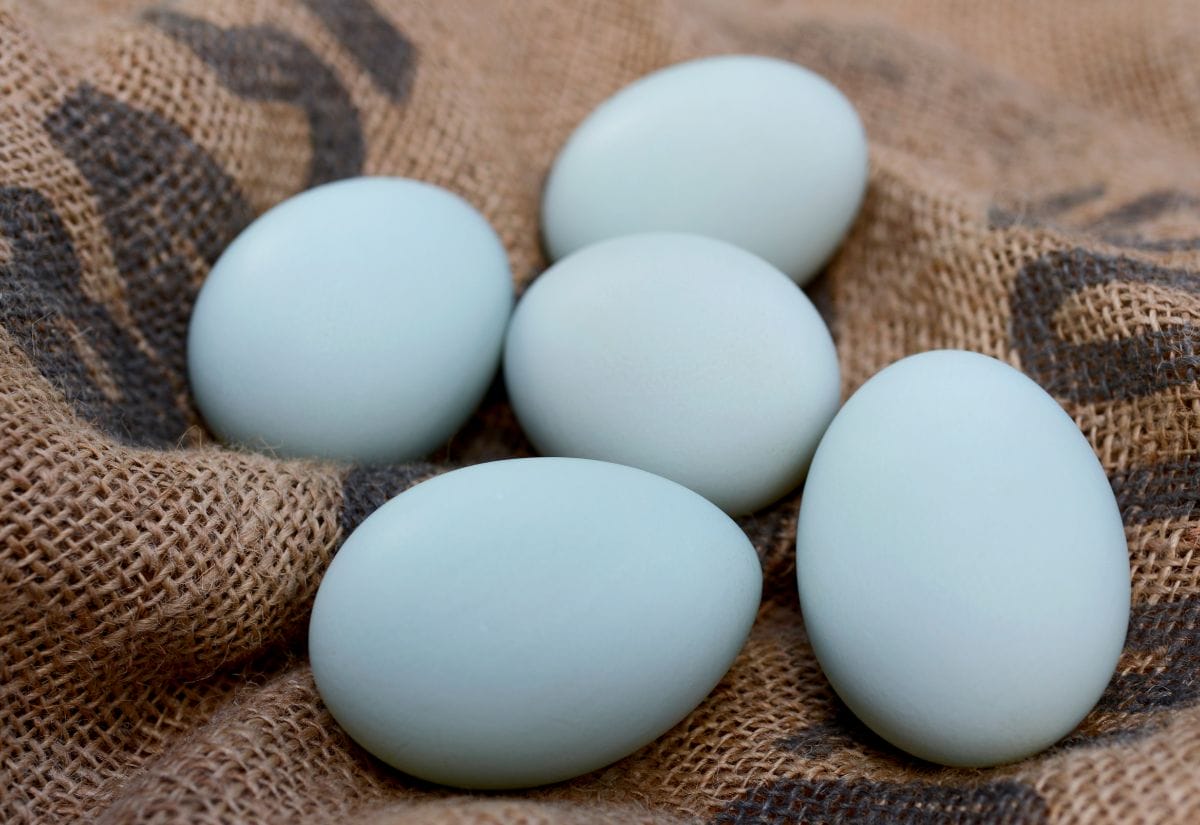
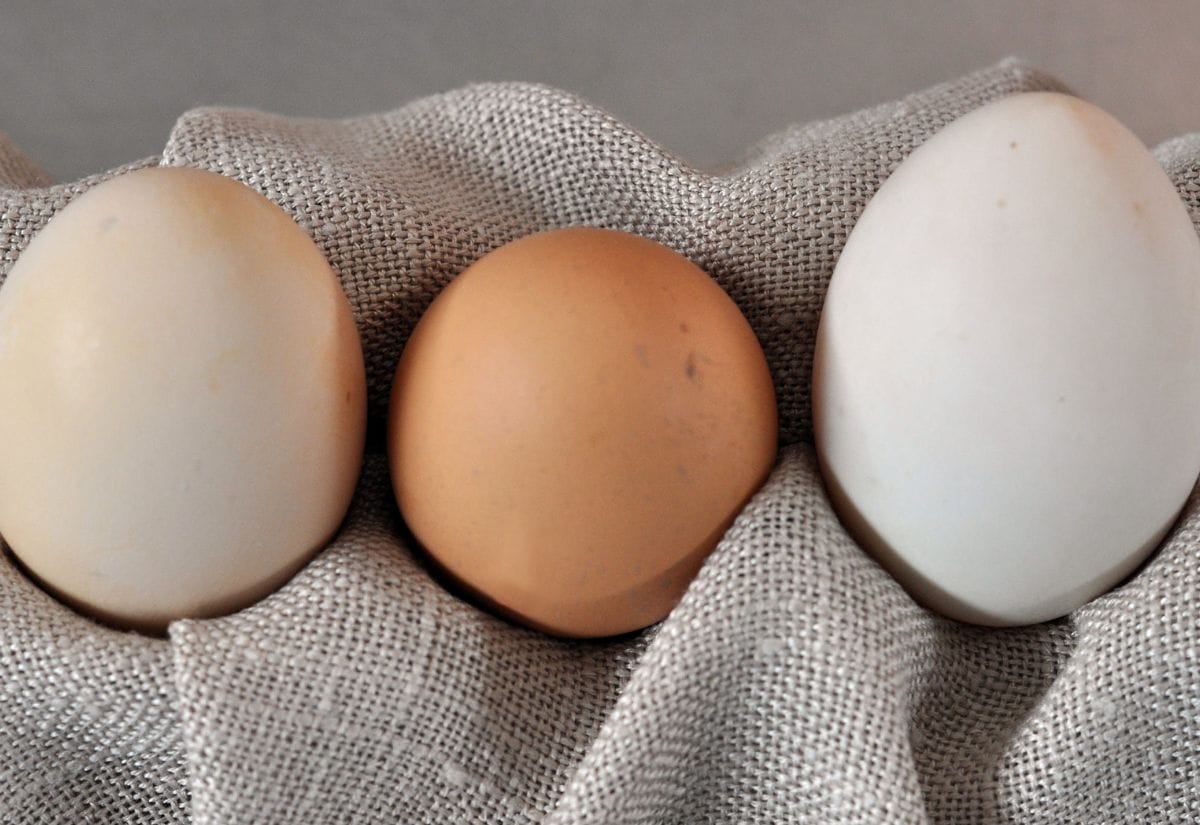
People get very excited about shell color, and I get it. White, brown, blue, green. None of that changes how the egg tastes or how you should cook it. If you’re curious about the “why” behind it, I go deeper into why chickens lay different colored eggs in another post.
Shell thickness can shift with age, diet, and overall hen health. Older hens may lay thinner shells, and low calcium can make shells feel weaker or more brittle.
How to Store and Handle Farm Fresh Eggs
Storage is usually the first big farm egg question, especially when someone hands you a room temperature carton and says, “They haven’t been washed.”
Should you wash farm fresh eggs?
Most of the time, no. At least not right away. Farm fresh eggs have a natural coating called the bloom, which helps seal the shell and keep bacteria out. Once you wash that off, the egg loses that protection.
If the egg is clean, I leave it alone. If it has a little dirt on it, I try to wipe it off dry first. I avoid soaking eggs because shells are porous, and water can pull bacteria where you definitely don’t want it. If an egg really needs washing, use water that’s warmer than the egg and wash it right before you use it.
I go into more detail on safe egg handling and storage in another post, especially for anyone sharing or selling extras.
Do farm fresh eggs need to be refrigerated?
Washed or unwashed is the deciding factor. If the egg is clean, uncracked, and still has the bloom, it can sit out for a couple of weeks. I’m more comfortable doing that in cooler weather, when my kitchen isn’t warm and the eggs are coming in more slowly. Once the egg is washed, though, it belongs in the fridge.
When eggs are coming in quickly, the fridge keeps everything easier. I use a rolling egg storage container so the freshest eggs are always in the front.
How to Tell If an Egg Is Still Good
Farm fresh eggs can last quite a while depending on whether they’ve been washed. Unwashed eggs can sit at room temperature for about 2 weeks or keep in the fridge for 2–3 months. Washed eggs should be refrigerated right away and used within about 4–5 weeks.
Even when you know the timeline, there’s always that moment of doubt with an older egg.
The Float Test
The float test is the egg test most people learn first. Put the egg in a bowl of water. If it sinks and lays flat, it’s fresh. If it stands up, it’s older but usually still usable. I’d use that one for baking or hard-boiling before I’d fry it sunny-side up. If it floats, I toss it.
What the float test is really showing you is how much air has built up inside the egg. As moisture leaves over time, the air pocket gets bigger, which is what makes it float. It’s helpful, but not perfect. I still crack older eggs into a separate bowl first, just to be safe.
Other Signs an Egg Has Gone Bad
The smell will tell you a lot. If it’s bad, you’ll know. After that, look at the white and yolk. Older eggs spread more, and the yolks can get weaker. That doesn’t automatically mean danger, but it does mean the egg isn’t at its best anymore.
Cooking & Baking with Farm Fresh Eggs
Changes to Recipes
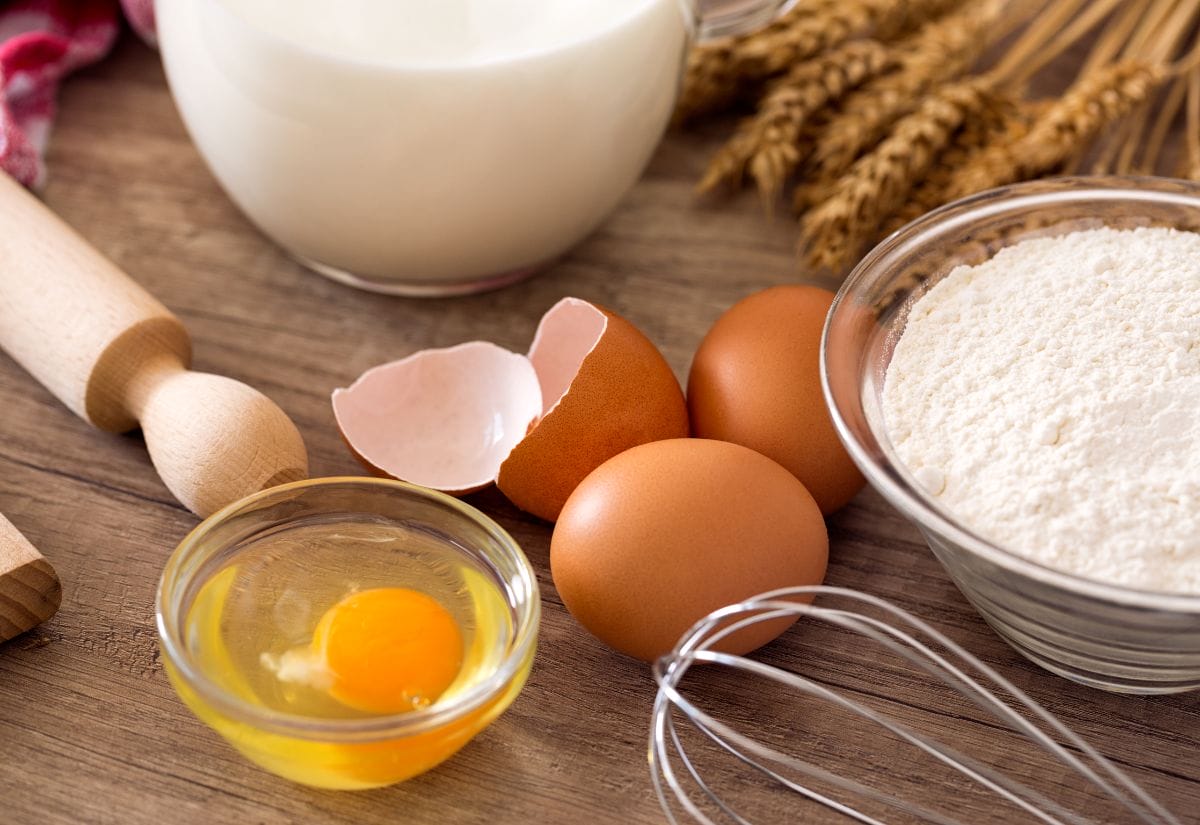
Farm fresh eggs can cook a little faster because the whites are firmer. Lower heat gives you more wiggle room, especially with scrambled eggs. In baking, the richer yolks can affect color and texture. Most of the time, that richer color is a bonus, but it may change the look of lighter cakes, custards, or doughs.
Adjusting for Size and Consistency
Store eggs are sorted by weight. Farm eggs are not. If you’re baking something that needs precision, it helps to pay attention to size. A carton with tiny pullet eggs, jumbo eggs, and everything in between can be a little unpredictable in baking. If I’m baking something important, I’ll either weigh the eggs or stick to similar sizes. Most baking recipes are written for large chicken eggs, which are about 50 grams without the shell.
And if you’ve ever struggled with peeling hard-boiled eggs, fresh eggs can be frustrating. For hard-boiled farm eggs, I’ve had much better luck using a method made for fresh eggs instead of fighting with the shells.
If you bake often, learning an easy way to separate egg whites will save you a surprising amount of frustration.
What’s Normal Inside a Farm Fresh Egg
Blood Spots and Meat Spots
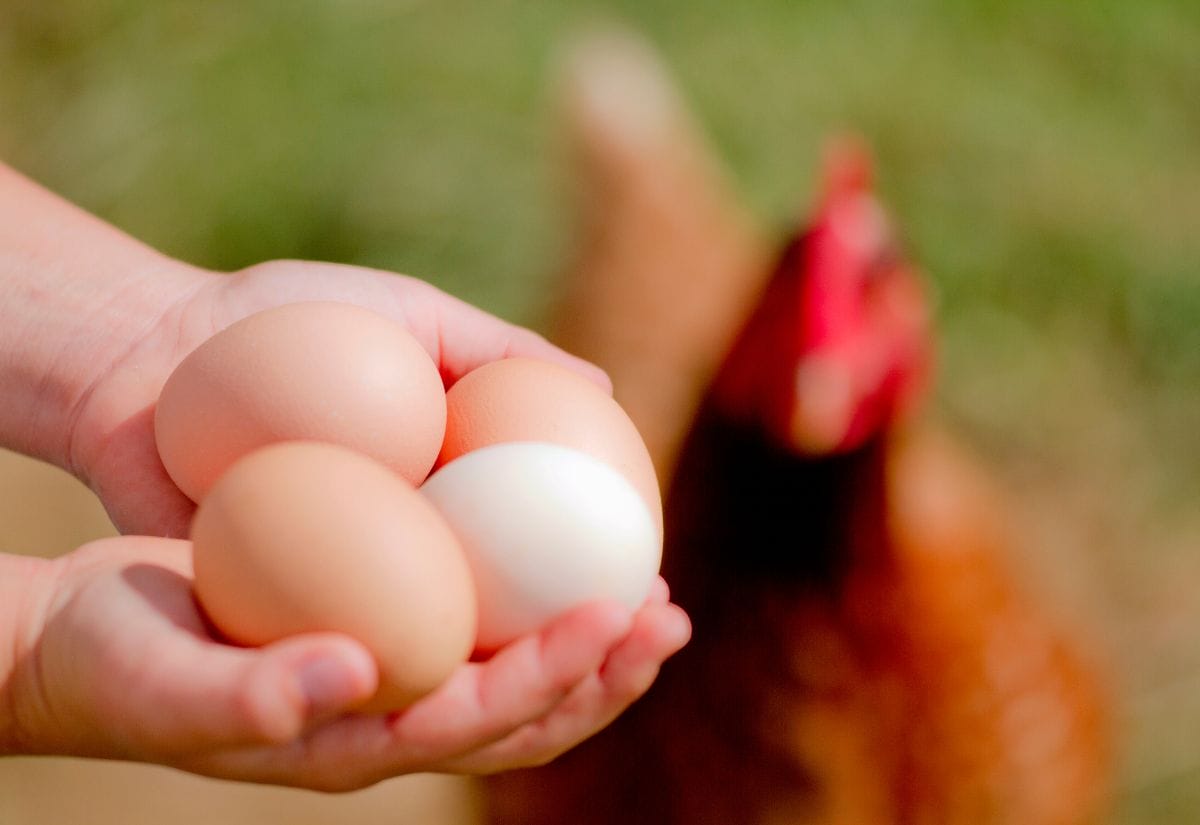
Every now and then you’ll crack an egg and see a small red or brown speck. Blood spots come from a tiny ruptured vessel during formation. Meat spots are small bits of tissue. Neither one means the egg is fertilized, and both are safe to eat. If it gives you the ick, scoop it out and move on.
Double Yolks, Cloudy Whites, and Stringy Bits
Double yolks happen more often in young hens. They’re harmless, and honestly, they’re always a little fun to crack into.
Cloudy whites are usually a freshness sign. That’s carbon dioxide that hasn’t escaped yet. And that stringy white piece near the yolk? That’s the chalaza. It helps hold the yolk in place, and you don’t need to pick it out unless it bothers you.
If you’re comparing eggs from different birds, you might also notice size and shell differences. For example, how guinea eggs compare to chicken eggs can be pretty eye-opening if you’ve never seen them side by side.
Common Questions About Farm Fresh Eggs
If farm eggs are new in your kitchen, these are the questions that tend to show up right after the first carton.
Pin this so you can come back to it when the egg basket fills up and you need a quick farm egg refresher.
At first, an egg is just an egg. Then you start raising chickens or buying from a local farm, and suddenly there’s a lot more to notice. Once you know what to expect, farm fresh eggs become pretty easy to work with. You start to notice the difference in everything from breakfast to baking. It’s hard to go back to store-bought.
If you’re using farm eggs now, tell me what surprised you first. For me, it was the yolks and those ridiculously stubborn fresh-egg shells.




Should I refrigerate them?
Hey there! You only need to refrigerate your eggs if you’ve washed them. Fresh, unwashed eggs can stay at room temperature for 2-4 weeks.
Thank you so much for this article. I’m new to being a chicken mama. My chickens are new and started laying eggs a couple months ago. I also have a rooster. I noticed when I crack open some eggs there a significantly sized whitish circle on the yolk. Not a spot, but sometimes a 1/8” to 1/4” whitish circle on the yolk. Do you know what this is and should I have concern.? I have never seen this on a commercial egg.
Hi, I have some hard boiled eggs that had a perfect white spot sitting in the middle of the boiled yoke. I was curious if that meant the egg was fertilized or not? I have 11 chickens. All are female (I’m like 95% sure).
I don’t know so here goes with what might be one of those,”There are no stupid questions.”
Do you wash eggs that you haven’t refrigerated (farm fresh) just before cracking to put into a recipe or just before vooking?
I don’t wash before use unless they’re gross. And there truly aren’t any stupid questions. We all have to start somewhere, am I right?
I never knew there was a way to identify a fertilized egg! Thanks for the information ?.
What makes a yoke firm? I have cracked eggs and the yoke is so thick it will not beat up it just clumps?
This was very helpful, thank you.
Annette
Some of my local eggs are blue. I can’t manage to eat them because I read the blue tint comes from a virus similar to HIV but not harmful to me and the eggs are safe to eat. Is this true?
If so the Americana and other chickens whom lay blue eggs are they related to this virus?
That is false. You can read more about what makes the egg blue here: https://104homestead.com/anatomy-egg-color/ They are completely safe to eat.
I saw a picture of your boots on Facebook and there were some mahogany colored eggs in the photo. What breed of chicken were they from? Marans?
Copper Marans
I’ve just got 4 hens and a rooster. He was surpose to be a hen but to my delight I get to him him crow every morning while drinking my coffee. No eggs yet but I was wondering if eggs can be frozen to cook with later and what is the refrigerator life of an egg. Also I have bought fresh eggs and find it hard to remove the shell when boiling. Any tricks.
Eggs can be frozen. One of the popular ways to do it is to crack and egg into each cup of an ice tray. That way they are single serve when you need them. Fresh eggs last quite a long time, especially if you keep them unwashed. Check this out: https://104homestead.com/egg-safety/
For peeling tips, Prairie Homestead has a great article: http://www.theprairiehomestead.com/2014/04/the-easy-way-to-peel-farm-fresh-hard-boiled-eggs.html Those fresh eggs can be a challenge.
What if the whites are really watery?
Watery whites usually indicate an egg is older. If you know the egg is fresh, it may be a sign that there is illness in the flock.
I have some large eggs that have a milky or runnie white why does it do that?
Dawn,
Are these eggs from your own hens or from someone else?
Sometimes a cloudy white comes from an egg that has gotten very cold or frozen and thawed.
I Get eggs from a local source. Sometimes I get eggs with cloudy or milky yolks. What causes that? Are they safe to eat?
Is the yolk cloudy or the whites? Cloudy egg whites are an indicator that the egg is very fresh. They clearer the whites are, the older the egg is. If the yolk is cloudy… well, I’ve never experienced that and it makes me wonder. If you have a photo, feel free to email it to me and I’ll take a look.
Thanks for sharing the information. I had been curious…and now I have answers!
I’m so glad to help!