
How to Turn Foraged Plantain into Bug Bite Salve
Make plantain salve for bug bites with foraged leaves, olive oil, and beeswax. A simple homemade salve for itchy summer skin.
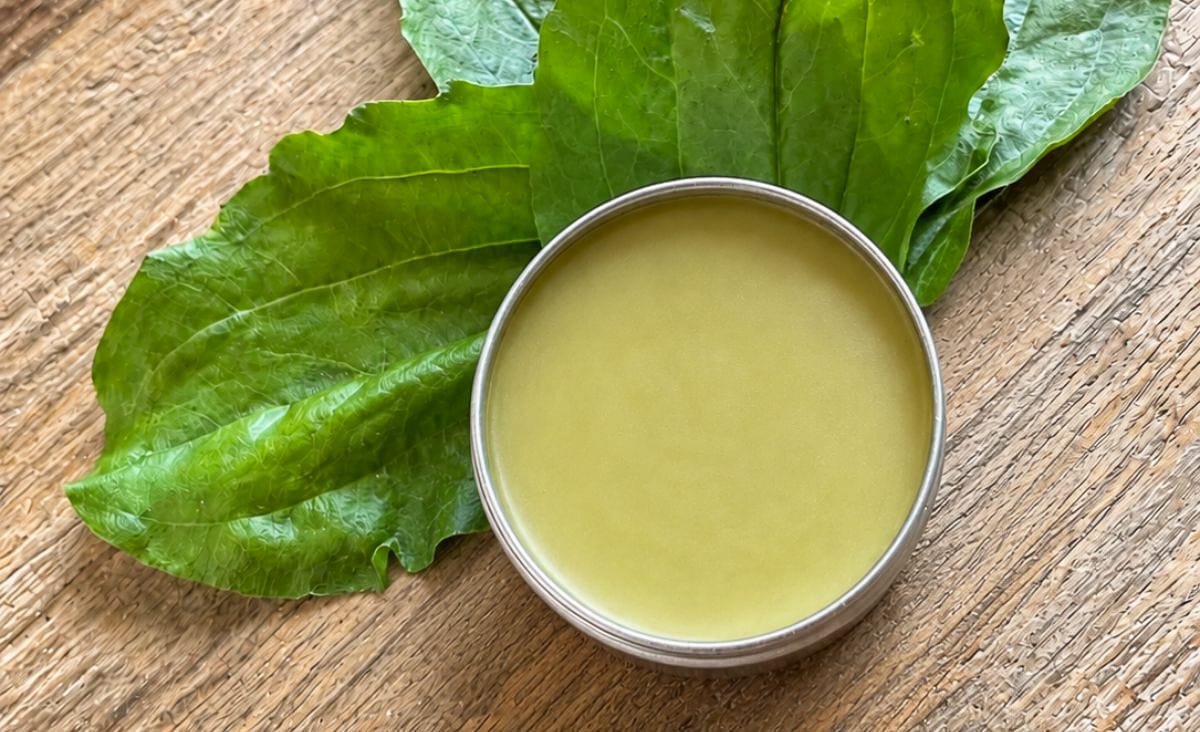
If you’ve ever stepped outside in Maine during black fly season, you already know that bug bites are not a minor inconvenience. They are a full-body experience. I’ve come in from evening chores looking like I lost a fight with the woods, and honestly, some nights I probably did.
This plantain salve uses plantain-infused oil and beeswax to create a small tin of salve you can keep near the garden door, in your bag, or wherever bug bites tend to find you first. I like having this made before the bugs get awful, because once black fly season hits, nobody wants to start a four-week oil infusion.
I’ll show you how to pick clean plantain, dry it well, steep it in oil, and turn it into a simple salve for itchy bug bites. I’ll also cover why dried plantain is better for infused oil, how to avoid harvesting from questionable spots, and how to get the salve consistency just right.
Finding and Foraging Plantain Safely
Plantain grows in the places you probably walk past every day, like the lawn, the garden path, and the packed-down spots near the house.
How to Identify Plantain
Just to be clear, this is not the banana-looking plantain from the grocery store. This is the low-growing green plant you’ll often find in lawns, garden edges, and well-worn paths.
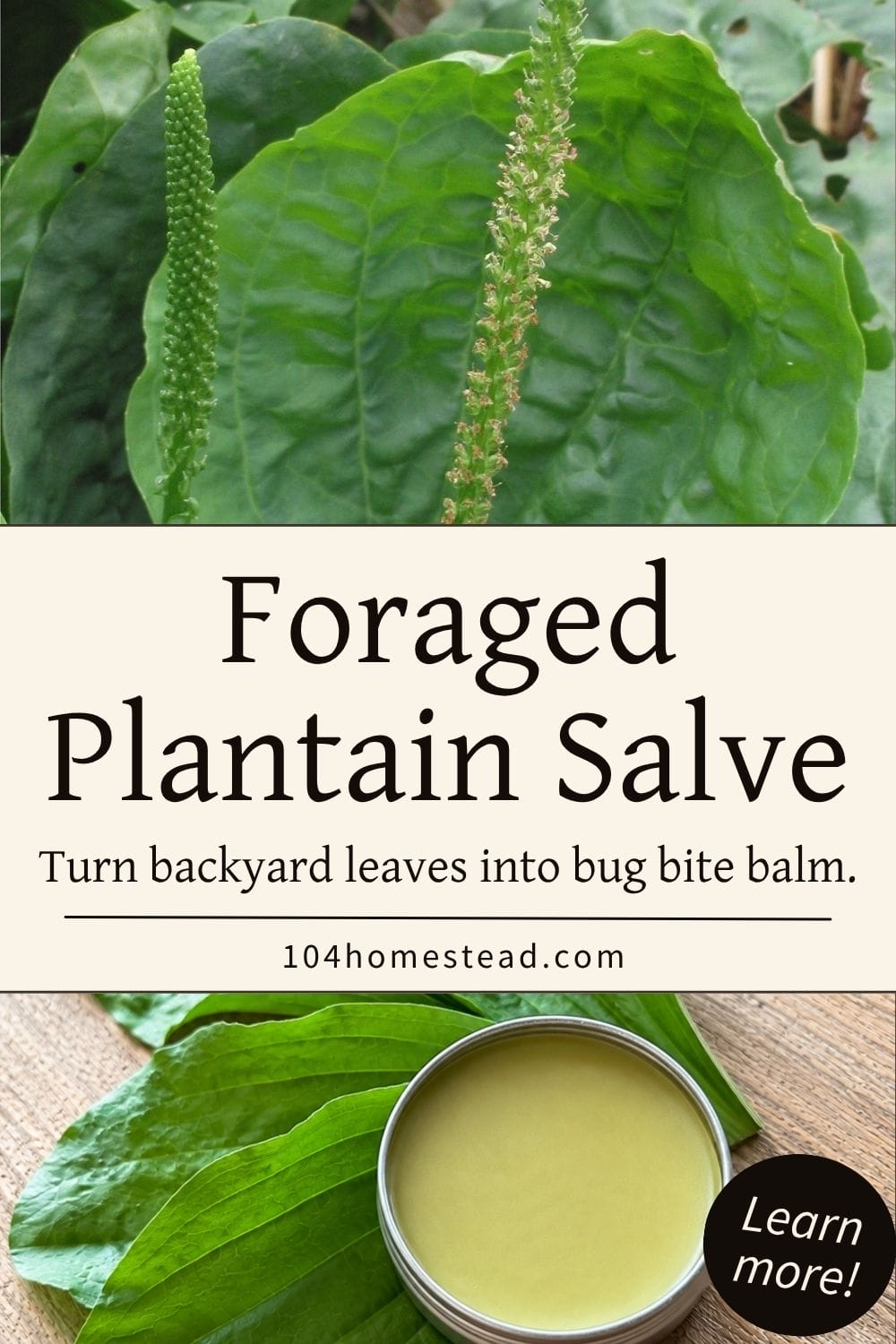
Broadleaf plantain has wide, oval leaves that grow in a low rosette. The leaves have strong veins running from the base toward the tip. The veins are one of the easiest clues because they run lengthwise instead of branching out like many other leaves. If you tear a leaf, you’ll often see the veins stretch instead of snapping cleanly, which is one of my favorite quick checks.
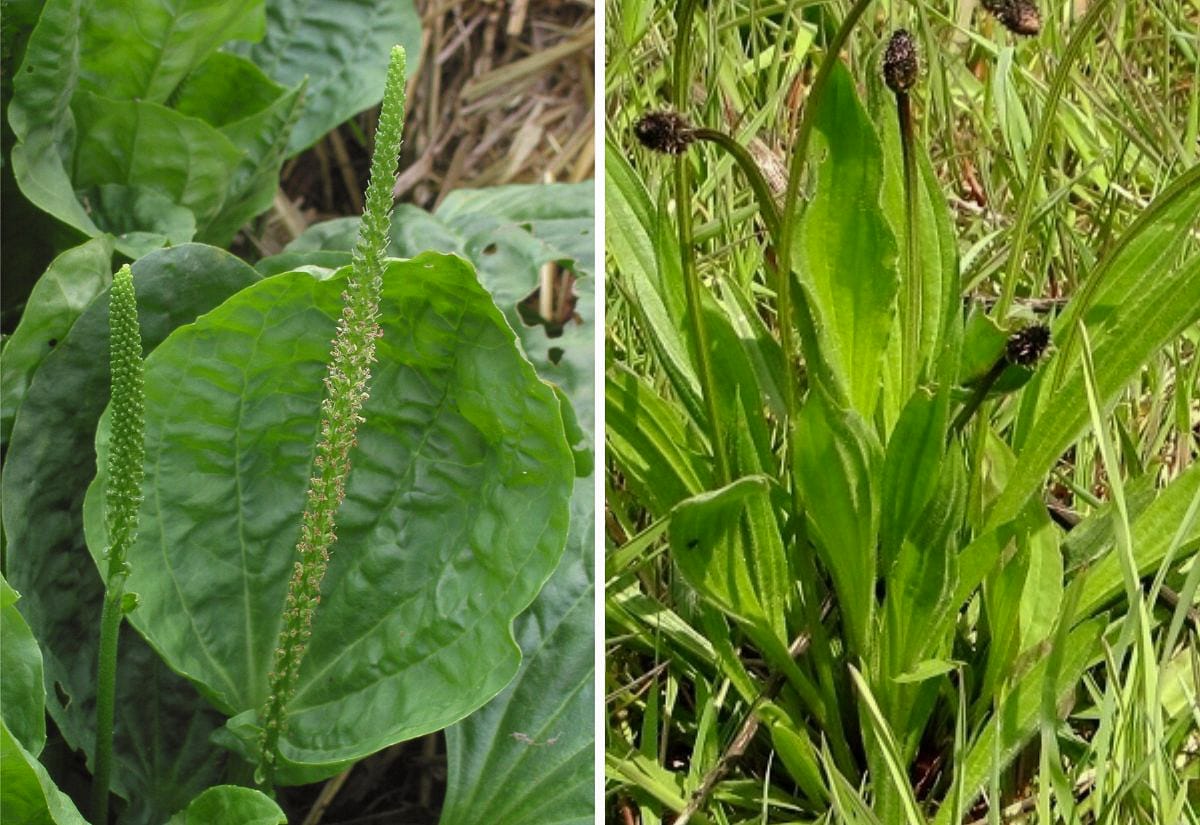
Narrowleaf plantain can be used too. It has longer, thinner leaves, but the same general growth habit and strong leaf veins. If you’re still learning what’s useful in your yard, start with my guide to recognizing medicinal and edible plants right outside your door.
Where to Harvest Plantain
Only pick plantain from clean areas you trust. I avoid plantain growing near roadsides, sprayed lawns, treated paths, pet potty zones, and anywhere that gets runoff from places I don’t control. A big beautiful plantain leaf is not worth it if it’s been soaking up lawn chemicals or sitting where the dog pees.
If you’re in Maine or a similar climate, plantain is only the beginning. There’s a lot more growing out there once you know what to look for.
Why I Use Dried Plantain for Salve
You can use fresh plantain right away as a quick poultice for a bug bite. Crush the clean leaf a little, place it on the irritated spot, and let it sit for a bit. That’s the quick “I’m outside and itchy right now” option.
For salve, I use dried plantain. Fresh leaves bring moisture into the oil, and that can shorten the shelf life or spoil the batch. I know it’s tempting to pick the leaves and drop them straight into oil, especially when the bugs are bad and you’re feeling motivated, but drying them first is worth the wait.
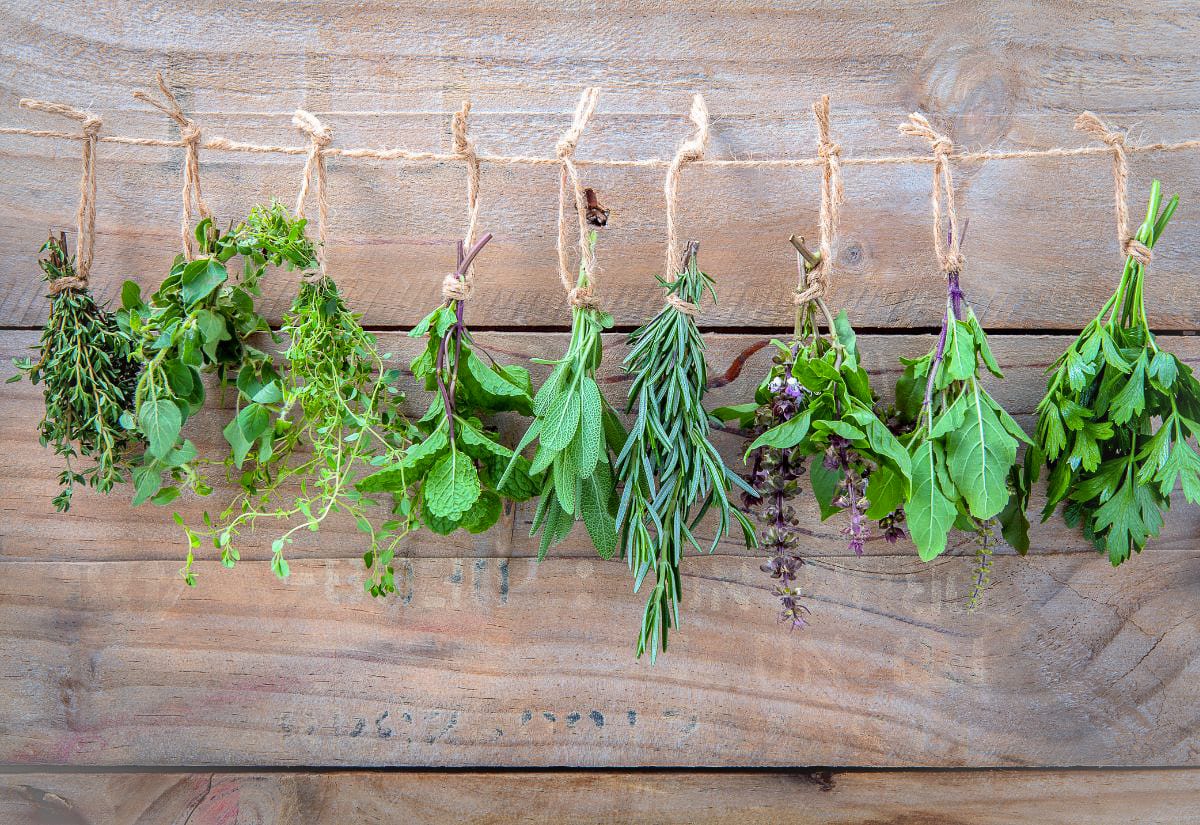
I dry plantain leaves until they are fully dry and crumbly. A fully dried leaf should snap or crumble when you bend it, not fold like a fresh leaf. If the stem or thick center vein still feels bendy, give it more time. You can air dry them in a single layer, use a dehydrator on a low setting, or hang them in small bunches if your house isn’t too humid.
If you’ve made salve before, none of this will surprise you. If not, it may help to read more about how homemade salves work and when to use them before you start melting beeswax and filling tins.
How to Make Plantain-Infused Oil and Salve
The infused oil does the plantain work, and the beeswax makes it firm enough to keep in a tin. I use olive oil because it’s easy to find, affordable, and gentle on skin. You can use another carrier oil (like coconut or sunflower) if you prefer, but olive oil works well.
Making the Plantain-Infused Oil
Put the dried plantain in a clean glass jar and pour the olive oil over the top. The leaves need to stay covered, so add a splash more oil if they start poking up. Keep the jar out of direct sunlight and shake it now and then when you think of it. After four weeks, strain the oil through a fine mesh strainer, cheesecloth, or a clean cloth. Bits of plant material left in the oil can make the finished salve feel gritty and may shorten its shelf life.
Turning the Infused Oil into Salve
For the salve, I use 1 cup of plantain-infused oil and 1 ounce of beeswax by weight. This gives me enough salve to fill seven 15 ml tins.
I use 15 ml aluminum screw-lid tins because they’re small enough to tuck into a bag, glove box, or garden basket. They’re also easy to share when someone else comes in covered in bites.
- Start with the beeswax in one jar and the infused oil in a second jar so they can warm separately.
- Create a simple double boiler by placing a few jar rims in the bottom of a stock pot. This gives the jars a raised platform so they are not sitting directly on the bottom of the pot.
- Add 1 to 2 inches of water to the pot and bring it to a boil over medium-high heat.
- Place the jar of beeswax in the pot and let the wax melt. If the water is boiling too hard, lower the heat so it stays hot without bouncing the jars around.
- When the beeswax is almost fully melted, place the jar of plantain-infused oil in the pot for a few minutes to warm the oil.
- Pour the melted beeswax into the warmed plantain-infused oil and stir until everything is combined.
- Pour the warm oil and wax mixture into your tins or containers.
- Let the salve cool completely before moving the containers or putting the lids on.
If your kitchen runs cool, the salve may set quickly. If it’s warm, walk away for a bit before you start judging the firmness. You can check how firm it will set before pouring by putting a small spoonful on a plate and letting it cool for a few minutes. If it feels too soft, melt in a little more beeswax. If it feels too firm, stir in a little more infused oil before filling your tins.
Using Plantain Salve for Bug Bites
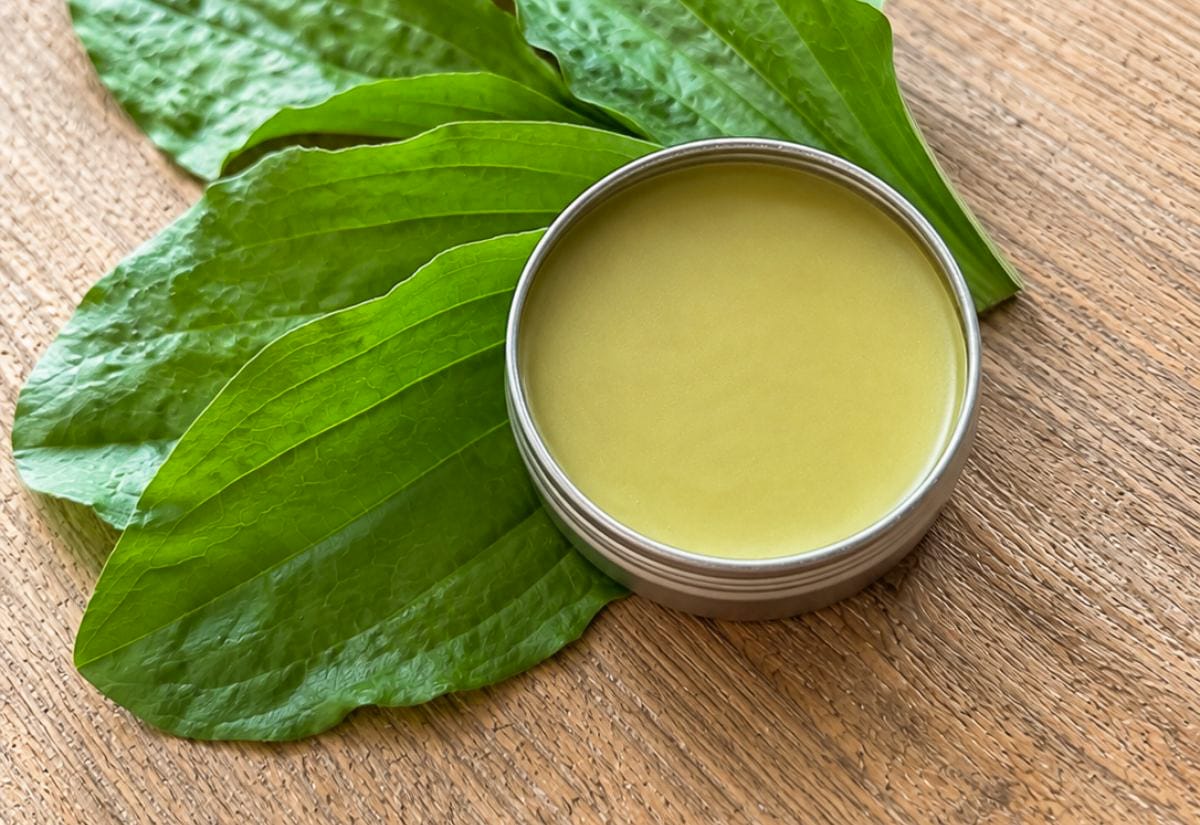
Plantain salve is best for minor bug bites, itchy spots, and everyday summer skin irritation. If you’ve been gardening or doing chores, wash the spot first. No need to seal dirt under the salve. I use a thin layer and rub it in gently with clean hands. A little goes a long way, so you do not need to glob it on. If a bite looks infected, keeps getting worse, or makes you nervous, that’s not a “slap some salve on it” situation.
I keep the salve handy, but I also do what I can to make the yard less mosquito-friendly. If mosquitoes are making your yard miserable, here’s how I cut down on mosquitoes around my yard naturally.
For storage, keep the tins in a cool, dry place. I label mine with the date and ingredients because I always think I’ll remember, and then I absolutely do not. It should last about a year. If the salve ever smells off, changes color in a strange way, grows anything questionable, or makes your skin feel worse, toss it.
If you want a heavier-duty salve for cold-weather skin instead of bug bites, I use a different recipe for a firmer homemade hand salve for dry, cracked skin.
Plantain Salve Questions Before You Start
If you’re staring at a pile of plantain leaves wondering what can go wrong, start here.
Pin this plantain salve recipe so you can find it again when the bugs are biting and plantain is popping up all over the yard.
There’s something satisfying about making something useful from a plant that was already growing underfoot. It’s simple, useful, and exactly the kind of thing that makes homesteading feel doable on the messy, buggy, sweaty days.
Have you used plantain before, or is this one of those backyard plants you’re just starting to notice?
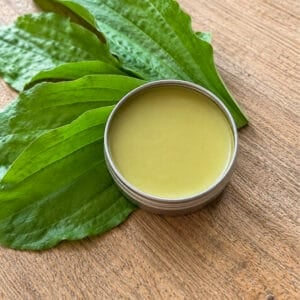
Plantain Salve for Bug Bites
This post may contain paid links. If you make a purchase using the links in this recipe, I may earn a commission.
Equipment
- 2 Mason Jars
- 1 Kitchen Scale
- 1 Heat-Safe Rack or jar rings
- 1 Fine Mesh Strainer or cheesecloth
- 7 15ml Tins
Ingredients
Plantain-Infused Oil
- 2 cups Dried Plantain Leaf
- 1 cup Olive Oil or other oil
Plantain Salve
- 1 cup Plantain-Infused Oil
- 1 ounce Beeswax by weight
Instructions
Make the Plantain-Infused Oil
- Add the dried plantain leaf to a clean glass jar. Pour the olive oil over the dried plantain, making sure the leaves are fully covered. Add a little more oil if needed.2 cups Dried Plantain Leaf, 1 cup Olive Oil
- Cover the jar and place it somewhere out of direct sunlight. Let the plantain steep in the oil for 4 weeks, shaking the jar gently when you remember.
- After 4 weeks, strain the oil through a fine mesh strainer, cheesecloth, or clean cloth. Press or squeeze gently to remove as much infused oil as possible.
- Discard the strained plant material and reserve 1 cup of plantain-infused oil for the salve.
Make the Plantain Salve
- Add the beeswax to one mason jar. Add the plantain-infused oil to a second mason jar.1 cup Plantain-Infused Oil, 1 ounce Beeswax
- Place a few jar rings or a small heat-safe rack in the bottom of a stock pot to create a raised platform for the jars.
- Add 1 to 2 inches of water to the pot and bring it to a boil over medium-high heat.
- Place the jar of beeswax in the pot and let the wax melt.
- When the beeswax is almost fully melted, place the jar of plantain-infused oil in the pot for a few minutes to warm the oil.
- Carefully pour the melted beeswax into the warmed plantain-infused oil. Stir until the oil and beeswax are fully combined.
- Pour the warm mixture into 15 ml tins or small salve containers. Let the salve cool completely before moving the containers or adding lids.
- Label the tins with the name and date.
Notes
- To test firmness before pouring, place a small spoonful of the melted salve on a plate and let it cool for a few minutes. If it feels too soft, add a little more beeswax. If it feels too firm, add a little more infused oil.
- Store finished salve in a cool, dry place. It should keep for several months to about a year if made with dried plantain and clean equipment.
- Use only on minor bug bites and everyday skin irritation. Do not use on infected skin, deep wounds, serious allergic reactions, or bites that are swelling quickly or getting worse.