
Duck Health Problems Every Homesteader Should Know
Learn how to spot duck health problems early, what they mean, and what to do so you can act quickly and keep your ducks healthy.
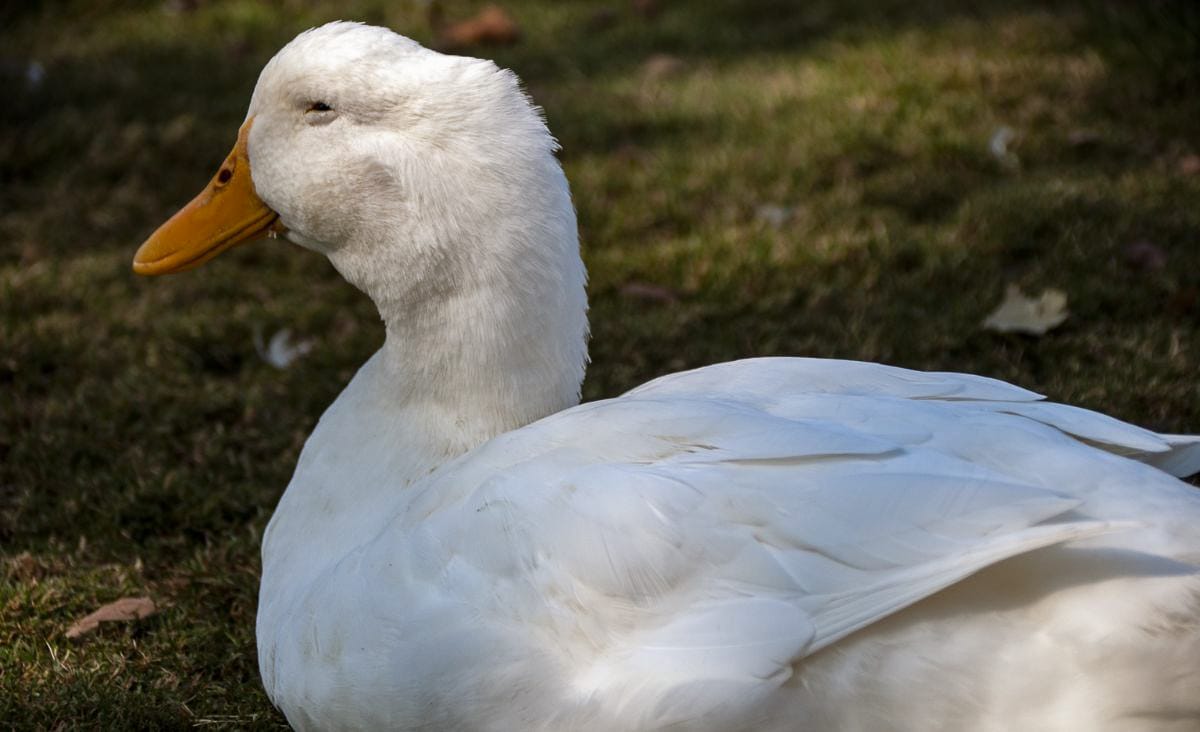
The first time one of my ducks started limping, I was convinced something was seriously wrong. I remember standing out there in the yard, watching her hobble across the grass while the others moved like nothing was happening. This was early on, back when I was still figuring things out through trial and error, and honestly, I assumed the worst.
Living in Maine, I’ve dealt with everything from muddy spring runs to frozen water in winter, and I’ve learned that a lot of things that look concerning at first are either completely normal or easily fixed once you know what you’re looking at.
These are the problems I’ve seen come up again and again. What’s normal. What’s not. And what to do about it. If something feels off, trust that and start here.
What’s Normal (Even If It Looks Like a Problem)
Before we jump into health issues, it helps to know what ducks just… do. There are a couple things ducks do that can look like a problem when they’re not.
Molting and Feather Loss
Ducks lose feathers. A lot of them. And when it happens, it can look rough. You might see patchy areas, loose feathers everywhere, or a duck that suddenly looks half its usual size. If everything else looks normal, it’s usually just a rough-looking molt.
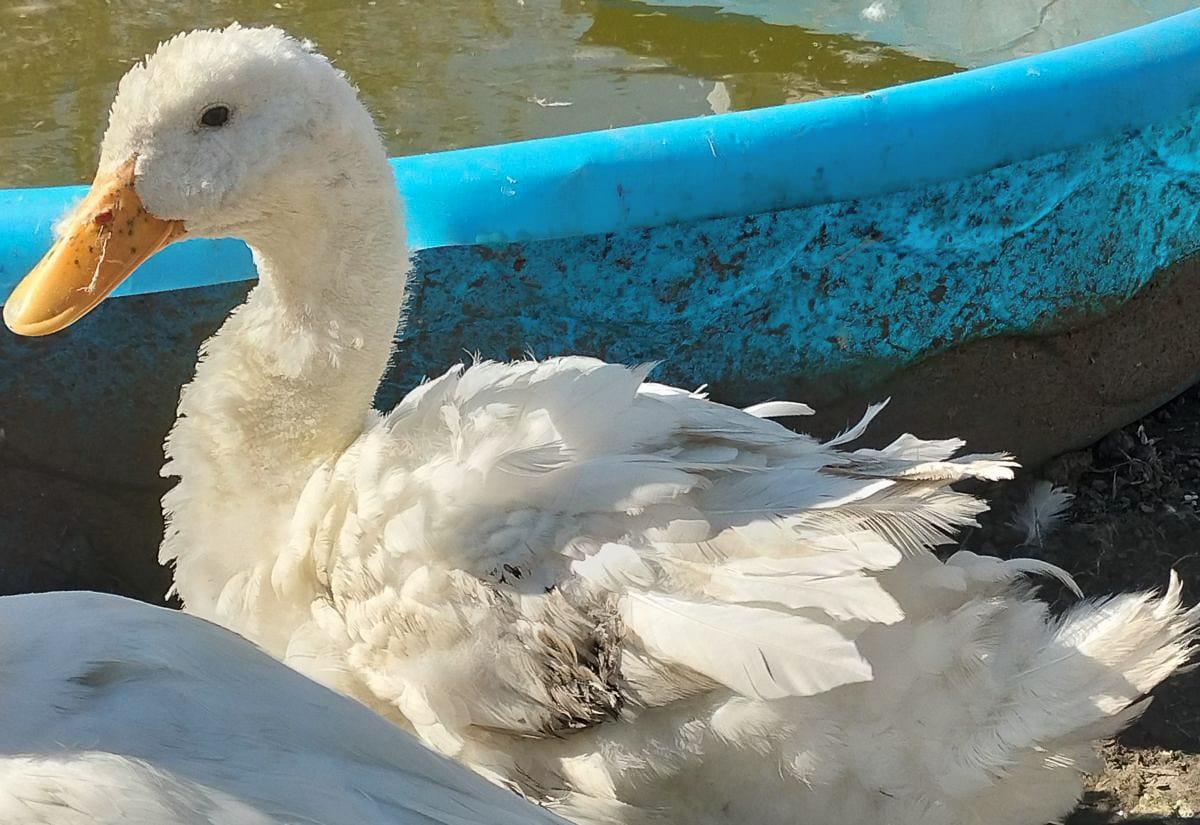
If you haven’t already, it helps to understand the rhythm of this in what to expect during duck molting throughout the year, because once you’ve seen it a couple times, it stops being stressful.
Messy or Wet Feathers
Ducks are water birds, but sometimes their feathers look soaked, clumpy, or a little greasy. This can happen after a long splash session or if their water gets dirty. Give them access to clean water deep enough to dunk their heads and watch if they preen and dry out within a few hours. If they still look soaked by the next day, even after clean water and rest, treat it as a real issue, not just a messy moment. At that point, it’s worth checking both water cleanliness and overall condition, because something isn’t working right.
Taking Breaks or Acting Quiet
Ducks aren’t machines. They’ll rest, stand off to the side, or take breaks from the group. A duck that’s just having a quiet moment will still move around when it wants to, rejoin the group, and eat normally. That’s very different from a duck that isolates itself and stays there.
The Most Common Duck Health Problems (What It Looks Like and What to Do)
This is where things stop being “probably fine” and start needing a closer look.
Limping or Trouble Walking
This is something you’ll probably see at some point. Almost every time I’ve seen this, it’s been one of these two things:
Niacin Deficiency
Young ducks need more niacin than chickens. If they don’t get enough, you’ll see:
- Weak legs
- Bowing or awkward walking
- Reluctance to move
If you catch it early, this is usually pretty fixable. The simplest fix is to increase niacin right away. You can do that by switching to a feed formulated for waterfowl or adding a niacin supplement to their water. Some people use brewer’s yeast mixed into feed as a short-term boost, and that can help too.
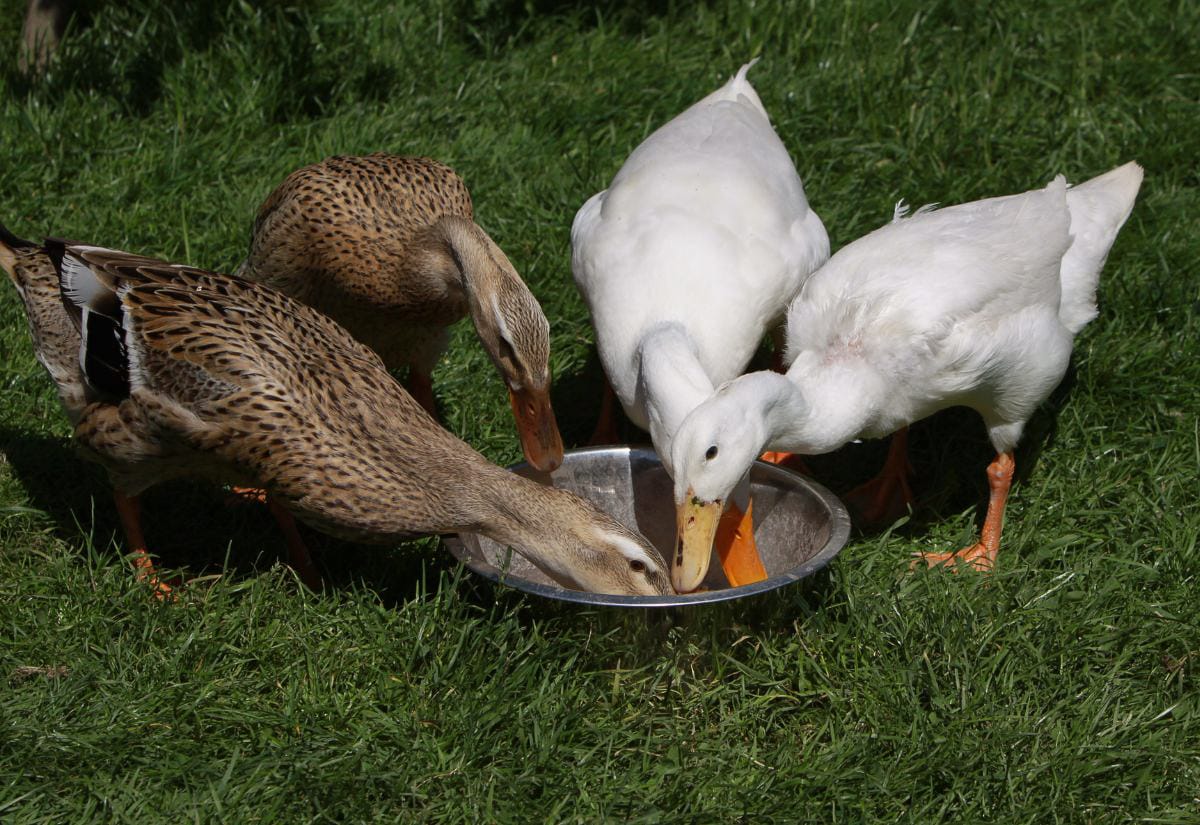
Give them access to the improved feed or supplement daily and make sure they’re eating and drinking it. This only works if they’re getting it daily. Once they are, you’ll usually start to see improvement within a few days. If nothing improves after about a week, or their legs continue to weaken, it’s time to take a closer look or consider getting help.
If you’re not sure your setup is covering that need, it’s worth revisiting how to properly feed ducks from day one so they grow strong and healthy, because feed is one of the easiest places to fix a problem before it gets worse.
Minor Injuries
I’ve seen ducks twist something just from jumping down wrong or slipping in mud. They aren’t always the most graceful creatures. If the limp is mild and they’re still eating and moving around, I usually give it a day or two while keeping an eye on them. During that time, make sure they can easily reach food and water without competing or walking far. Watch for improvement within 24 to 48 hours. Even a slight improvement is a good sign. If there’s no change, or they start avoiding putting weight on the leg completely, it’s time to step in and address it.
If the duck gets worse or stops putting weight on the leg, I separate it so it isn’t being pushed to move more than it should. Check the leg and foot for swelling, cuts, or anything obvious you might have missed. Limit movement for a couple of days and make sure food and water are right next to them.
If you’re dealing with swelling, give them a quieter space and limit how much they need to move. Ducks won’t rest on their own if the rest of the group is active, so separating them helps.
For cuts or scrapes, rinse the area with clean water and keep it as clean and dry as possible. Most minor injuries heal well as long as they’re not constantly walking through mud or dirty water.
Watch closely for signs that it’s more serious. Things like heavy swelling, heat in the leg, refusal to stand, or the limp getting worse instead of better are all red flags. At that point, it’s worth considering a vet, especially if you don’t see improvement after a couple of days of rest.
Feathers That Don’t Look Right
Feathers can tell you a lot, but you have to look at the whole picture.
Wet Feather Condition
If your duck looks constantly soaked and never fluffs back up, even when dry, that can point to a problem with their natural waterproofing. This is often tied to:
- Dirty water
- Lack of proper bathing opportunities
- Poor overall condition
Clean water and a place to properly dunk and preen go a long way here. Dump and refill their water with clean, fresh water and make sure it’s deep enough for them to fully submerge their heads.
Nine times out of ten, this comes down to their living conditions. If you’re dealing with constant dampness or mud, take a look at how to keep a duck coop clean and dry , because moisture is everything with ducks.
Feather Loss Outside of Molting
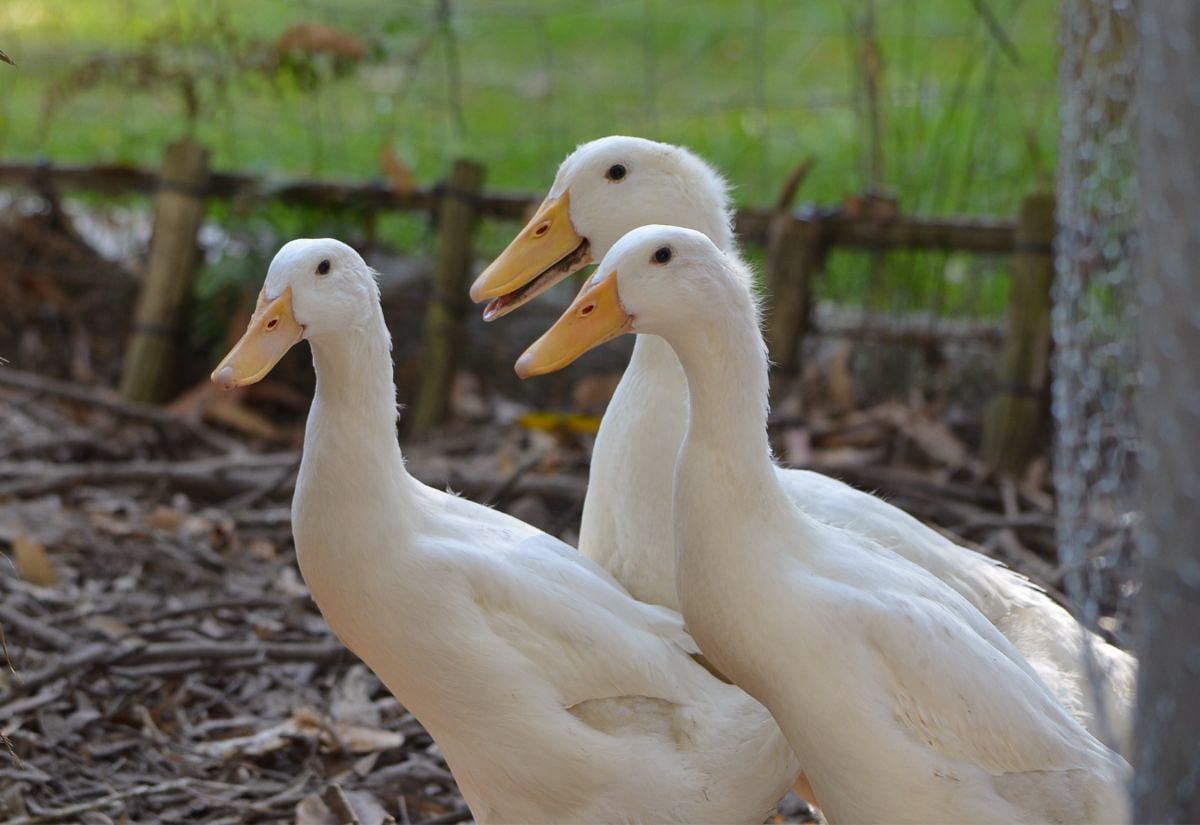
If feathers are coming out and it’s not molting season, look at pecking from other ducks, stress, and their nutrition.
Spend a few minutes watching closely to see if one duck is being chased, pecked, or pushed away from food. If you see that happening, separate the affected duck or adjust space and resources so competition drops. Feather loss from behavior usually improves quickly once the pressure is removed.
Acting “Off” or Different Than Usual
This one’s a little harder to put into words, but you notice it fast once you know your ducks. A duck that isn’t right might:
- Hang back from the group
- Move less than usual
- Show less interest in food
If your duck is still eating, moving, and interacting, you’re usually safe to watch and wait. If appetite drops, movement slows, or they separate from the group, that’s when you shift from watching to acting. I usually start by separating the duck so I can see exactly what’s going on without the distraction of the group.
More often than not, it’s something small. Food access. Water. Space. Fix those first before assuming it’s something bigger. If they still aren’t eating, are staying hunched or quiet, or seem weaker as the day goes on, that’s when I start treating it as a real health issue instead of a temporary situation.
Breathing or Eye Issues
I usually see this when something’s off in their setup. You might notice slight wheezing, damp or crusty eyes, or more head shaking than usual.
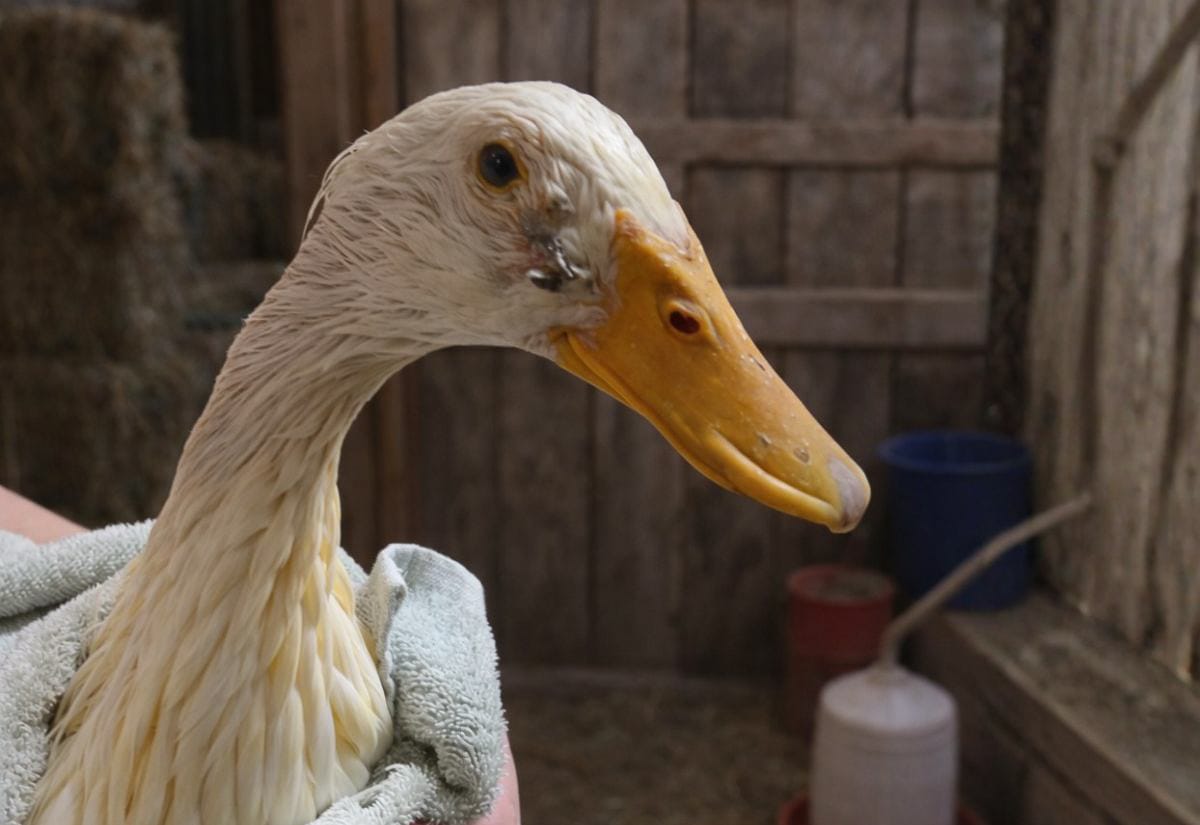
Start by refreshing bedding, improving airflow, and making sure there’s no buildup of moisture or ammonia. Sometimes just opening things up for a day or two makes a big difference. If symptoms improve after those changes, you’ve likely found the cause. If you’ve cleaned things up and improved airflow but you’re still seeing issues, you may be dealing with something more than just environment.
Respiratory infections can show up as continued wheezing, open-mouth breathing, or a duck that just can’t seem to clear its airways. Eye issues that don’t improve might look like ongoing swelling, discharge, or one eye staying closed more than the other. At that point, isolation helps so you can monitor them more closely and keep things clean. Fresh water is important here too, since ducks use it to clean their eyes and nostrils.
If symptoms don’t improve within a couple of days, or they get worse, that’s when I’d consider outside help. Breathing issues in particular are not something I like to wait on too long.
When to Watch and When to Step In
Some things you can watch. Some things you shouldn’t wait on.
When I’m in watch mode, I’m checking on them a couple times a day. You’re looking for small improvements, not just hoping it doesn’t get worse. If nothing changes after a couple of days, I stop waiting and start adjusting something.
This usually means separating the duck, reducing stress, and making care easier for them. The sooner you act at this stage, the easier it is to turn things around. You don’t need to jump to worst-case scenarios, but you also don’t want to ignore clear warning signs.
What Prevents Most Duck Health Problems
Most of the time, this stuff doesn’t just happen overnight and it usually comes back to the basics:
- Clean, accessible water deep enough for them to dunk their heads
- Balanced feed with proper nutrients
- Dry areas to rest, even if they spend most of their time making a mess elsewhere
- Enough space to move and avoid stress
Breed can play a role too. Some are hardier or better suited to certain setups, which is why I always recommend reading through which duck breeds are best suited for your homestead setup and climate before building your flock.
If you’re raising ducks alongside chickens, your setup matters even more. Mixing species adds another layer of management, which I talk about in what really works when raising ducks and chickens together in one space.
Trying to Figure Out If Your Duck Is Sick? Start Here
If you’re wondering about any of these, you’re not alone.
Pin this so you can quickly figure out what’s going on if one of your ducks starts acting off.
This all gets easier the longer you keep ducks. What feels confusing at the beginning starts to make sense once you’ve seen a few of these situations play out in real time. You don’t need to know everything right away. You just need to start paying attention to your birds and trust what you’re seeing. That’s how you start making better calls.
One thing I’ve learned over time is that not every situation has a perfect answer, and that can be uncomfortable when you’re trying to do right by your animals. Sometimes you watch, adjust, and learn as you go. That’s part of it. The more time you spend with your ducks, the more confident you’ll get in reading them. And that confidence makes a bigger difference than any checklist ever will.
If you’ve run into something with your ducks that had you second guessing, I’d love to hear about it. Drop it in the comments and let’s figure it out together.