What Kind of Chicken Do I Have? Comb Types and Breed Clues
Learn how chicken comb types, feather patterns, feet, and egg color can help you identify mystery chicks and backyard chickens.
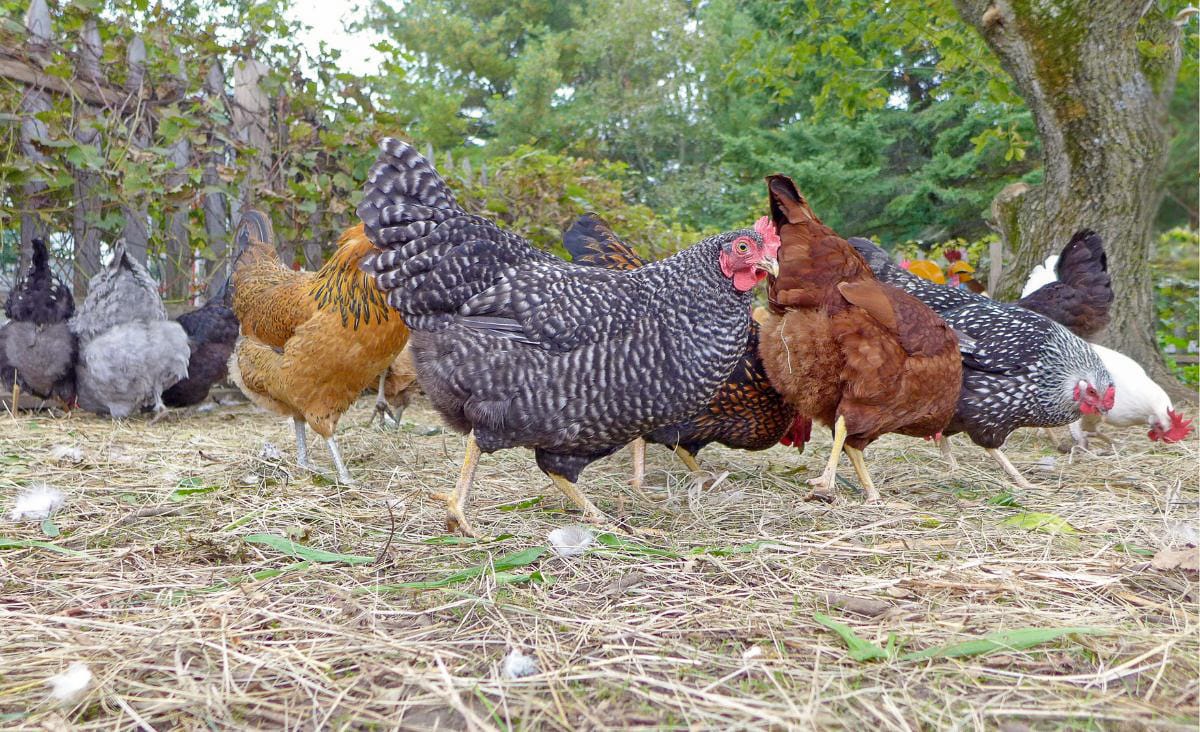
A friend once sent me a blurry little chick photo from her hatchery order and asked the classic backyard chicken question: what kind of chicken is this thing? I’ve been there. Between hatchery assortments, local farm birds, surprise chicks, and the occasional backyard mix that looks like three breeds got tossed in a feed scoop and shaken around, chicken identification can get tricky fast.
You do not need every breed detail memorized before you can start ruling things out. You just need to know which clues to look at first. I’ll show you the main clues to look for, including comb type, feather pattern, feathered feet, and those wild little head feathers some breeds carry.
If your bird came from a Hatchery Choice box, a local farmyard pen, or a “not totally sure, but she lays eggs” situation, you’re in the right place.
Why Chicken Breed Identification Isn’t Always Easy
Some birds are obvious. Others are a shrug, three clues, and a best guess.
Hatchery Choice Chicks
Hatchery Choice, assorted, rare breed assortments, and “extra chicks” are fun, but they can leave you guessing for months. A Hatchery Choice chick is usually just that… the hatchery choosing from whatever chicks they have available. That means you may get common breeds, rare breeds, or breeds that look very similar when they are young. If the hatchery does not give you a short list of possibilities, you may have to let the chick grow out before you can do much more than guess.
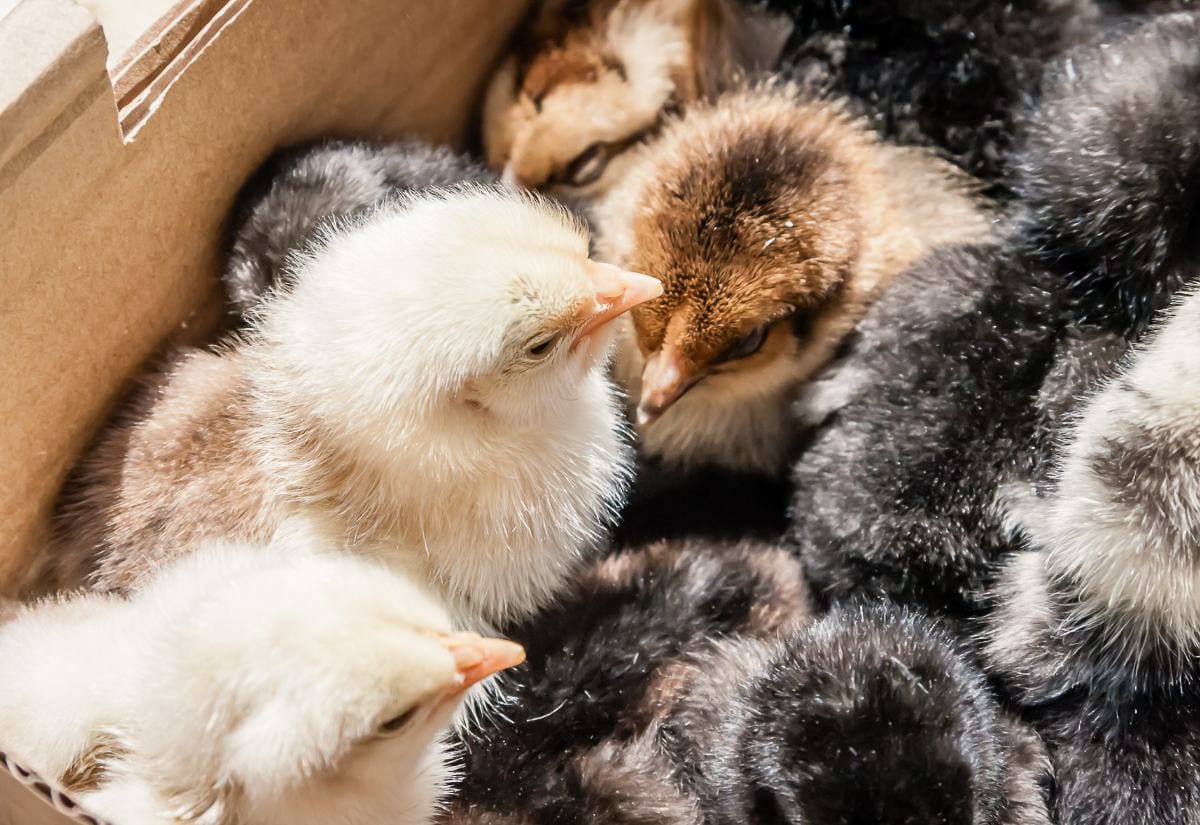
That’s when I start looking at the comb, feather pattern, leg color, and overall build. You may not know right away, but you can usually narrow the list as the bird grows.
If you’d rather skip the mystery-chick stage next time, buying older chicks or started pullets can make identification a lot easier.
Backyard Mixes and Project Birds
Locally bought birds can be even trickier than hatchery birds. A small farm may sell “barnyard mix” chicks, Olive Eggers, Easter Eggers, or project birds from pens that are not separated by breed. There is nothing wrong with those birds, and honestly, a lot of them are wonderful backyard hens.
Mixed-breed chickens can inherit traits from both sides. A bird might have the comb from one breed, feather color from another, and body shape from something else entirely. That does not make her any less useful. It just makes the guessing harder.
Chicken Comb Types and Feather Patterns to Compare First
The comb is the fleshy red growth on top of a chicken’s head. You can see them without picking up the bird, which is helpful if your chicken has decided today is not the day for cooperation.
Start With the Comb
The comb is usually one of the easiest traits to compare once the bird is old enough for it to show clearly. Once chicks are several weeks old, the comb usually starts giving you something to work with.
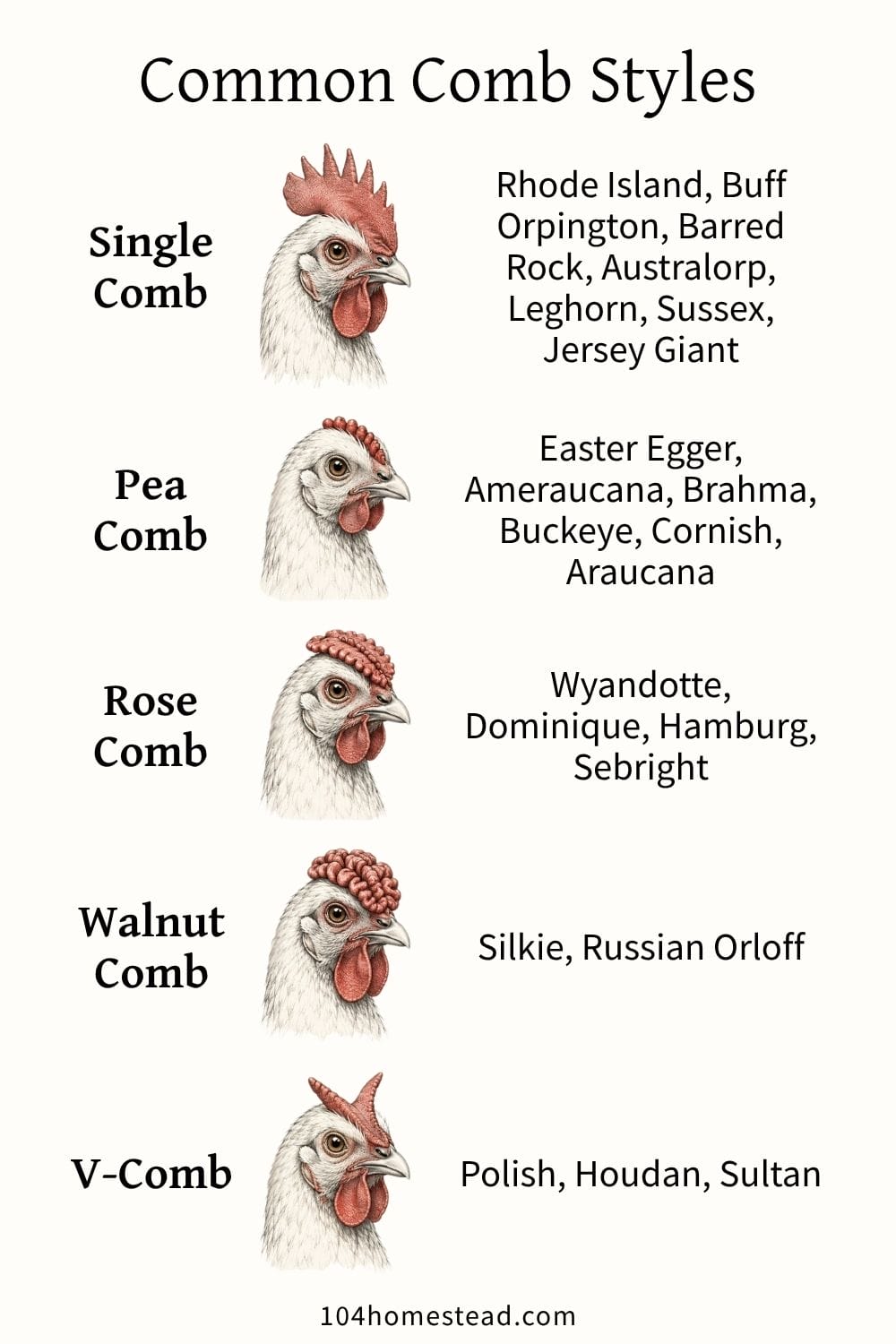
| Comb-Type | Description | Common Breeds |
|---|---|---|
| Single | One upright row of points. | Plymouth Rock, Rhode Island Red, Leghorn, Australorp, Cochin |
| Rose | Low, wide comb that sits close to the head. | Dominique, Wyandotte, Sebright, Hamburg |
| Pea | Small rounded bumps, often in three rows. | Brahma, Ameraucana, Araucana, Cornish |
| Walnut | Rounded, bumpy comb that looks like a mound. | Silkie |
| V-Comb | Two horn-like points. | Polish, Houdan, Sultan |
You may run across cushion, strawberry, and buttercup combs in breed charts, but I would not expect to see them often in a regular backyard flock.
A cushion comb is small, low, and rounded without obvious points. It can look a little like a softened rose comb, but it does not have the same defined shape or trailing point. Chanteclers are the breed most often associated with cushion combs.
A strawberry comb is raised, rounded, and bumpy, with a texture that can resemble the outside of a strawberry. It is not flat like a rose comb. You may see it listed with breeds like Malays or Yokohamas, but it is not a common backyard trait.
A buttercup comb is one of the most unusual comb types. It forms a cup-like shape with points around the edges, almost like a little crown. It is mostly associated with Sicilian Buttercups, which is why most backyard chicken keepers will never need it for everyday breed identification.
Next, Look at the Feathers
Once I’ve checked the comb, I move to the feathers. I’m looking for stripes, spots, lacing, or any pattern that repeats across the bird.
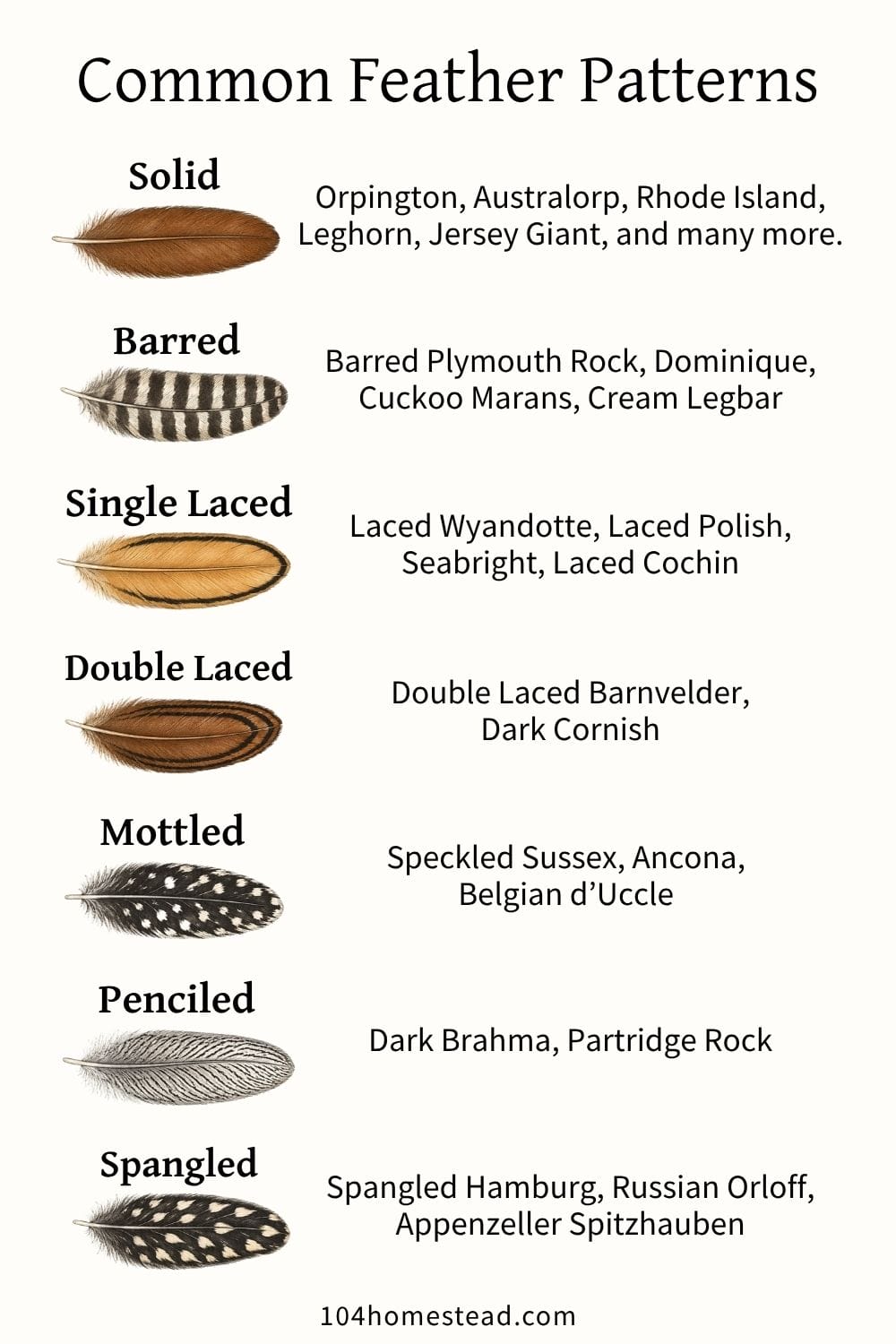
| Feather Pattern | Description | Common Breeds |
|---|---|---|
| Solid | Each feather is mostly one color. | Australorp, Orpington, Jersey Giant, many others |
| Barred | Repeating bands across the feathers. | Barred Plymouth Rock, Dominique, Cuckoo Marans |
| Laced | Each feather has a contrasting edge. | Wyandotte, Sebright, Cochin |
| Double Laced | Two curved lines of color within each feather. | Barnevelder |
| Penciled | Fine lines following the shape of the feather. | Plymouth Rock, Hamburg |
| Mottled | Light tips or spots on darker feathers. | Houdan, Ancona, some Leghorns |
| Spangled | Contrasting spots that look centered on the feather. | Hamburg |
Feather patterns can change as chicks grow. That fluffy baby in your brooder may not look much like the bird you end up with. Mixed birds can also land somewhere near a named pattern without matching it perfectly. I see this a lot with barnyard mixes, Easter Eggers, Olive Eggers, and project birds.
Other Clues That Can Point You Toward a Breed
If the comb and feather pattern are not enough, look at the feet, cheeks, at top of the head.
Head Feathers, Beards, and Muffs
If your chicken has feathers sticking up on its head, start looking at crested breeds or mixes with crested genetics. Crests can be neat and rounded, tall and wild-looking, or small enough that you only notice them when the bird turns its head. On some breeds, the crest may cover part of the eyes, which can make the bird seem jumpy or easily startled.
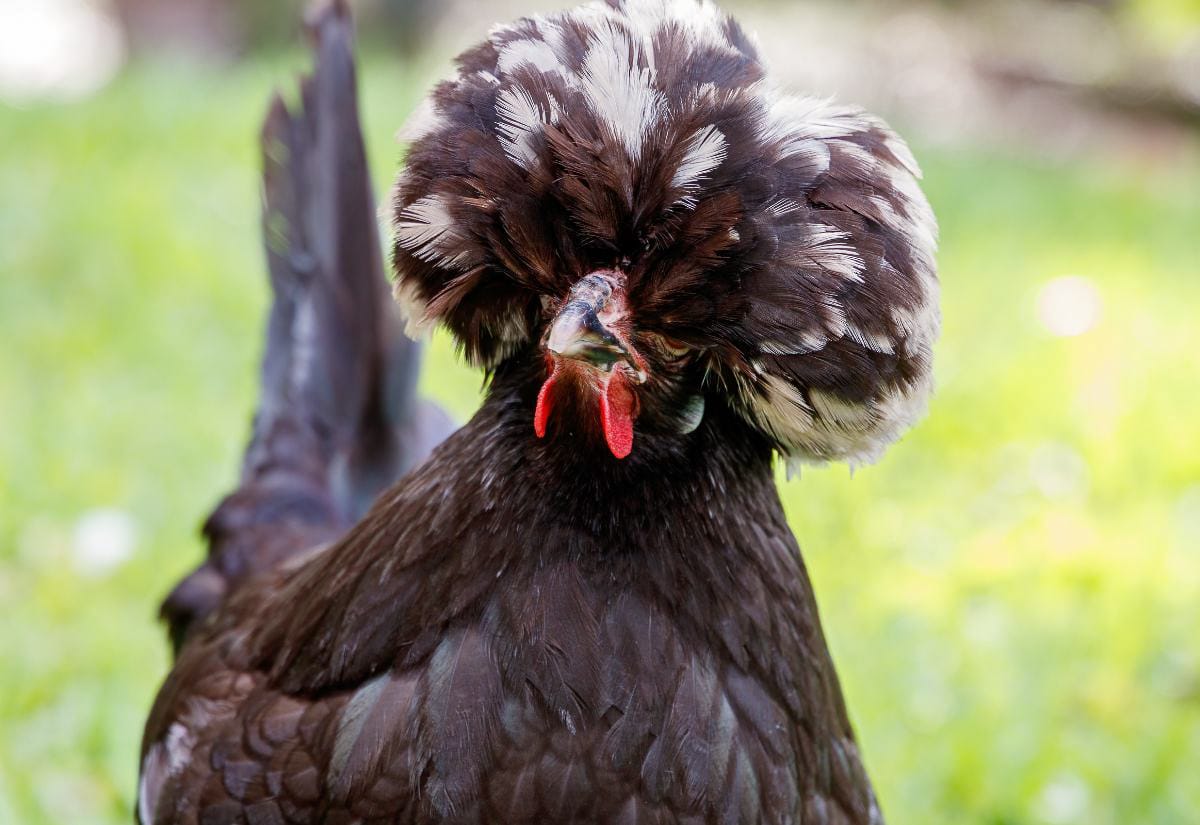
Polish chickens are one of the most recognizable crested breeds. Silkies, Houdans, Sultans, Appenzeller Spitzhaubens, Crevecoeurs, and Brabanters can also have noticeable head feathers.
Some chickens also have muffs and beards. Muffs are the fluffy feathers on the cheeks. Beards are the feathers under the beak. Ameraucanas and Easter Eggers are good examples of birds that may have this look.
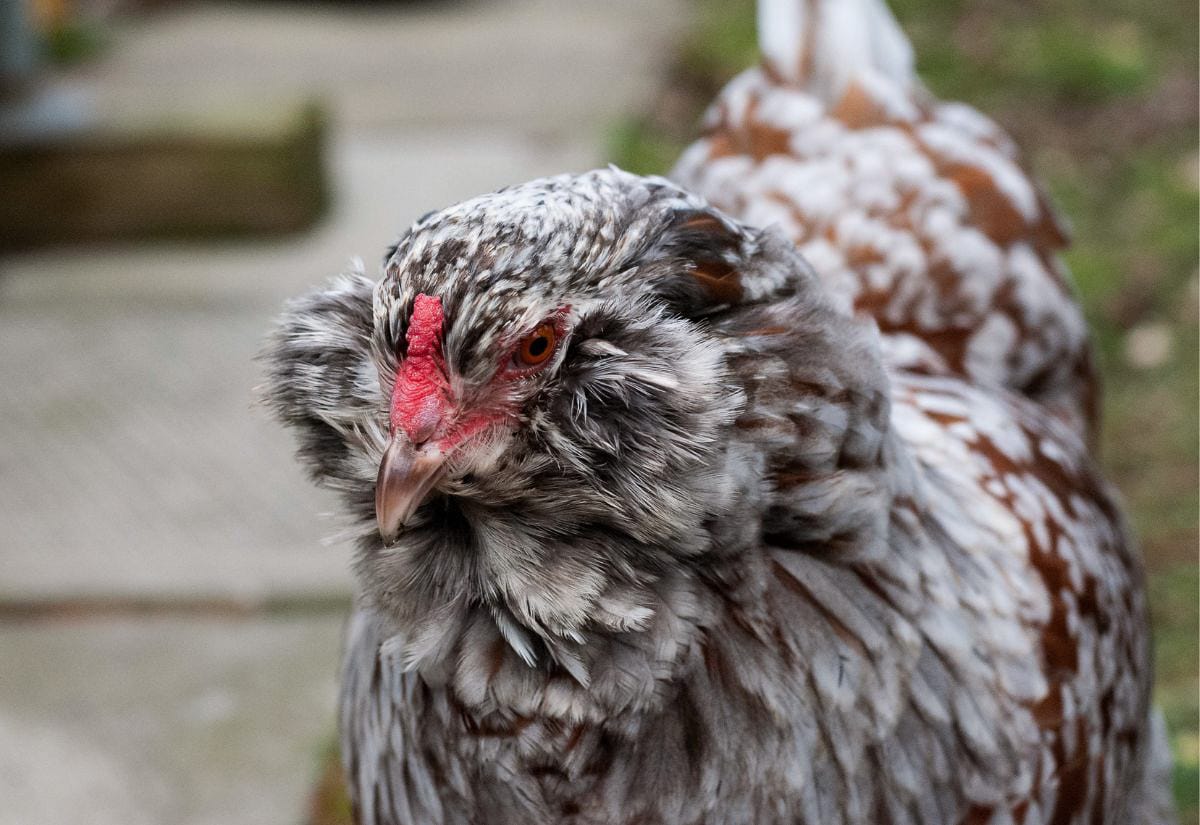
If your mystery bird has a pea comb, muffs, a beard, and later lays a blue or green egg, that gives you a stronger clue. Blue eggs narrow the list a bit, so I’d use which chicken breeds are known for laying blue eggs to narrow down the possibilities.
Feathered Feet, Leg Color, and Unusual Feathering
Feathered feet are another strong clue. Brahmas, Cochins, Silkies, Faverolles, Sultans, and d’Uccles are all breeds that may have feathers on their legs or feet.
Leg color can help too. Yellow legs are common in breeds like Plymouth Rocks and Rhode Island Reds, while slate-colored legs may point you toward breeds like Ameraucanas or Easter Eggers. White or pinkish legs show up in other breeds, including some Orpingtons and Sussex. Silkies often have dark skin and five toes. Most chickens have four.
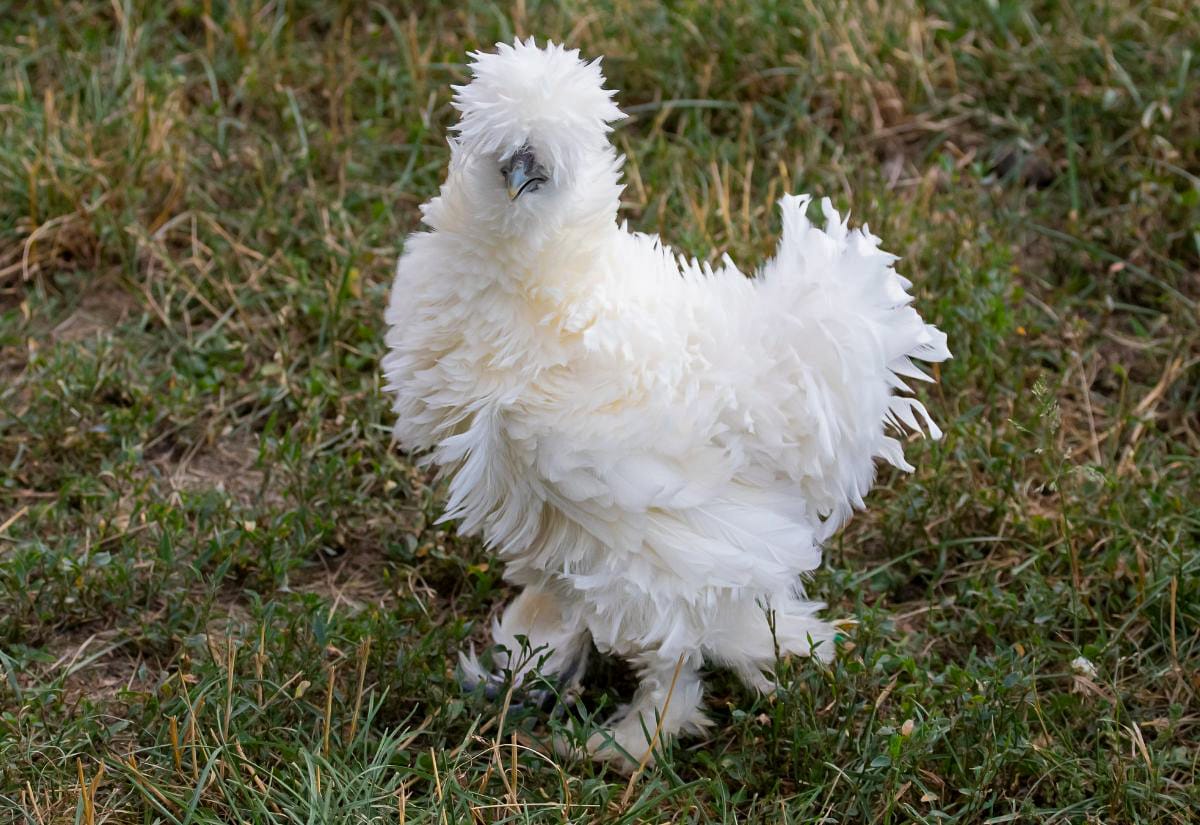
Frizzle feathers curl outward instead of lying flat against the body. If that sounds like your bird, what makes frizzle feathers different from regular feathers may help.
If you’re asking for help identifying a bird:
- Take clear photos from the side, front, and top of the head.
- Identify the comb type first.
- Look at feather pattern, leg color, and whether the legs are feathered.
- Watch for special traits like crests, muffs, beards, extra toes, or unusual feathers.
Dominique vs. Barred Plymouth Rock: A Real-Life Identification Example
If you want to see why comb type matters, compare a Dominique and a Barred Plymouth Rock. They’re both black-and-white barred birds. If you’re new to chickens, they can look nearly identical. But once you know what to look for, they are much easier to separate.
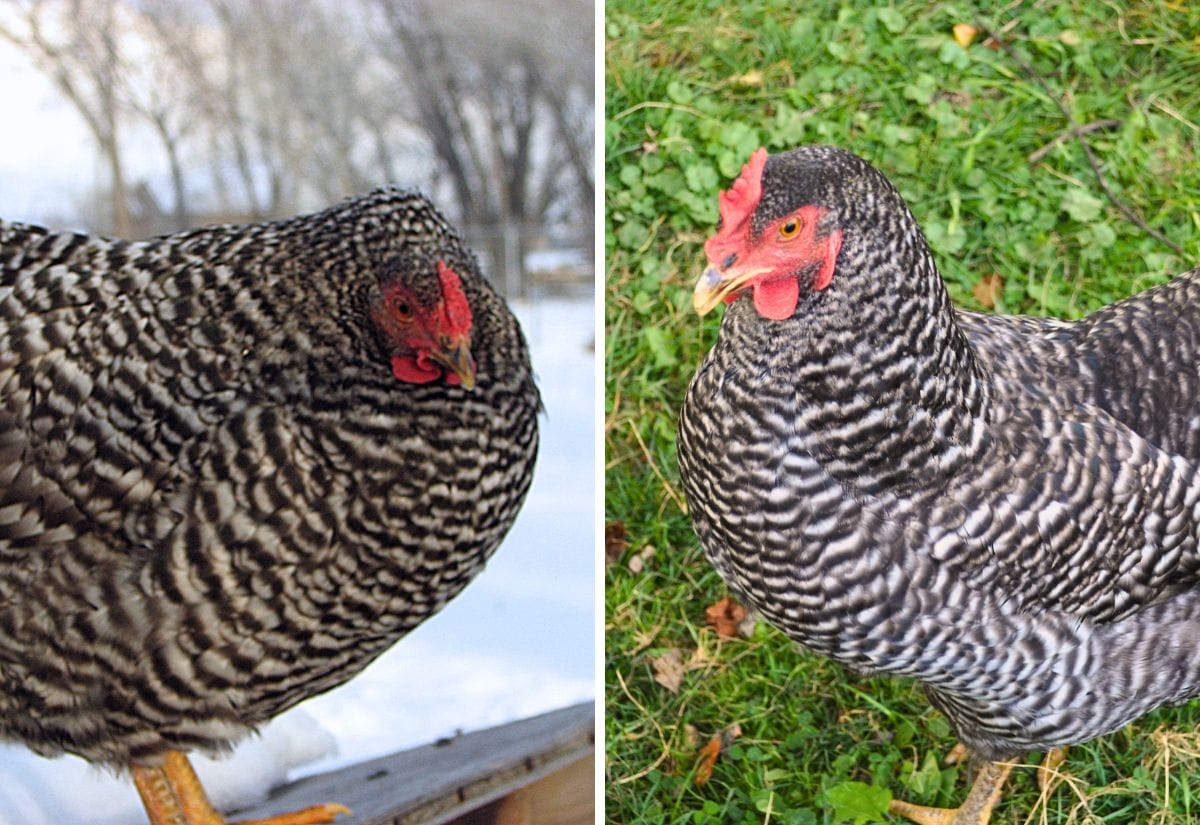
Both breeds have barred feathering. Both breeds show up in backyard flocks pretty often. Barred feathering shows up in more than one breed, and mixed birds can have barred feathers too. The comb is the first thing I look at when comparing these two. A Dominique has a rose comb. A Barred Plymouth Rock has a single comb.
| Feature | Dominique | Barred Rock |
|---|---|---|
| Comb | Rose Comb | Single Comb |
| Feather Pattern | Barred (Black + White) | Barred (Black + White) |
A low, wide rose comb points more toward Dominique. A tall single comb points more toward Barred Plymouth Rock. But mixed birds can make this messy. If she came from a mixed pen, she may have barred feathers and traits from more than one breed.
Unless you’re breeding, selling, or showing birds, close is usually good enough. From there, good daily care matters more than the exact breed name. If you’re newer to chickens, basic care tips for keeping laying hens healthy is a better next step than worrying over every tiny breed detail.
Chicken Breed Identification Questions
Still not sure what you brought home?
Pin this for the next time you’re staring at a chicken in your coop wondering what on earth you brought home.
Some breed guesses will be easy. Others may keep you guessing until they mature, start laying, or show a few more traits. And honestly, I kind of like that about backyard birds. If she lays well, fits into your coop, and makes you smile when you head out with the feed bucket, she’s already doing her job.
If you’re trying to identify one of your own chickens, leave a comment with the traits you’re seeing. Comb type, feather pattern, leg color, and whether the bird has head feathers or feathered feet are the best clues to start with. The more details you include, the better chance we have of narrowing it down.
Would like to know if there are any other barred feathered breeds? I never heard of crele old English until this article, thanks. I’m aware of rocks and dominques… Are Millies considered barred?
Oh hey… on the front is one of the idio- i mean polish. (our polish are idoits…but so freaking funny…. and cuuut with der lil puffs)
Sweeet and Simple, thank you kindly. Enjoy your life!!!;0
Looking for a chicken with a pattern in a single feather that resembles the back end of the Penciled Plymouth Rock photo on this site. Hard to describe though…Looking at the photo of the Penciled Plymouth Rock you see thin lines zig zagging across the back and rear of this hen. I’d like to find a feather that has this thin line &zig zagging all on a single feather. The thinner the line, the better! Color is optional. This sounds Crazy I know, but I do have a good explanation and an even better reason for wanting it. It’s just too long to type right here. Does anyone know of a chicken, pigeon, Guiana…anything really, as long as it has this thin line zig zagging down a single feather? I don’t care if it’s on a Sea Gull or a Buzzard, as long as I can find a feather like this. Do I have you wondering now….. Thanks Guys!
That was a fun article to read on chickens. Definitely looks at them in a different perspective. Although I have to admit, my 7 hens are far from fashionable show birds 🙂
Yeah, my girls are rather run-of-the-mill as well 🙂
Great article! So much information!
You did a GREAT job with this article Jess! Thanks for all the information. I’ve shared it everywhere.
Thank you Rhonda!